The 3-Minute Morning Cup I Make Instead of My Second Coffee

My first cup of coffee is non-negotiable. It's the second one that always got me into trouble. For about fifteen of my twenty coffee-drinking years, I'd pour a second mug around 10 a.m. — not because I wanted it, but because the first one was already wearing off and my inbox was winning. By 11:30 I'd be a little wired, a little edgy, and weirdly still tired. You know the feeling.
So this recipe exists because I got tired of that middle-of-the-morning wobble. It takes about three minutes, it's the thing I make almost every workday now, and it's built around Ashwavana Guru Focus. I'll give you the exact measurements below. But first, quickly — because "focus drink" means nothing until you know what's in it — let me tell you what's actually doing the work in the cup.
What's actually in the cup (the short version)
Ashwavana Guru Focus is a fifteen-ingredient blend, and the reason it drinks calm instead of jittery comes down to how a few of those ingredients play together. The star pairing is L-theanine and the caffeine in matcha green tea. L-theanine is an amino acid from tea leaves that nudges up alpha brain-wave activity — the relaxed-but-alert state — and when it rides alongside caffeine, it smooths the stimulant's sharp edge. Research on that combination, including a double-blind crossover study on selective attention in sleep-deprived adults, found it improved sustained and selective attention while cutting the jittery feeling caffeine alone can bring.
Then there's the adaptogen side. Ashwagandha (Withania somnifera) works on the HPA axis — your stress-response system — and in randomized, placebo-controlled trials like the KSM-66 stress and anxiety study, it lowered cortisol and perceived stress. Lower morning cortisol tends to feel like steadier energy and less snapping at your email. Rhodiola rosea backs that up on the fatigue front; the classic SHR-5 study on physicians working night shifts showed it helped blunt stress-induced mental fatigue when the work got demanding.
The rest of the roster rounds out the "clear head, good circulation, steady blood sugar" picture:
- Beet root is loaded with dietary nitrate, which your body turns into nitric oxide to widen blood vessels — one crossover study found dietary nitrate boosted cerebral blood flow and cognitive performance.
- Grape seed extract and pomegranate bring polyphenol antioxidants; pomegranate juice, in a study of older adults with mild memory complaints, was linked to better memory task performance and task-related brain activity.
- Cinnamon and ginger root help keep post-meal blood sugar from spiking and crashing — the thing that quietly drives a lot of "3 p.m. cravings."
- Lemon balm (rosmarinic acid nudging GABA pathways) and matcha both lean toward calm, balanced attention.
- Vitamin D3 (with K2 to direct calcium sensibly), plus turmeric, goji berry, and chlorella for mood, anti-inflammatory, and antioxidant support.
One of our reviewers put the felt result better than any ingredient list can: it "leaves me feeling awake but BALANCED with a happy energy." Another said simply, "I love the energy and focus without the jitters." That's the target. Now, the recipe.
The 3-Minute Morning Focus Cup
This is my everyday version — clean and green, lightly citrusy. It's the one I reach for when I want to skip the second coffee entirely and still get real work done before lunch. Makes one 12 oz serving.
Ingredients
- 1 serving (1 scoop) Ashwavana Guru Focus
- 2 to 3 oz warm water (not boiling — about 175°F / 80°C), for whisking
- 8 oz cold water, or 6 oz water + 2 oz milk of choice for a creamier cup
- 1 to 2 tsp fresh lemon or lime juice (optional, but it wakes the whole thing up)
- ½ tsp honey or maple syrup, optional
- A handful of ice, if you're going iced
Steps
- Bloom it in warm water first. Add the scoop to 2–3 oz of warm (not boiling) water in your mug or a small bowl. Boiling water can make green-tea blends taste bitter, so let the kettle sit a minute after it clicks off.
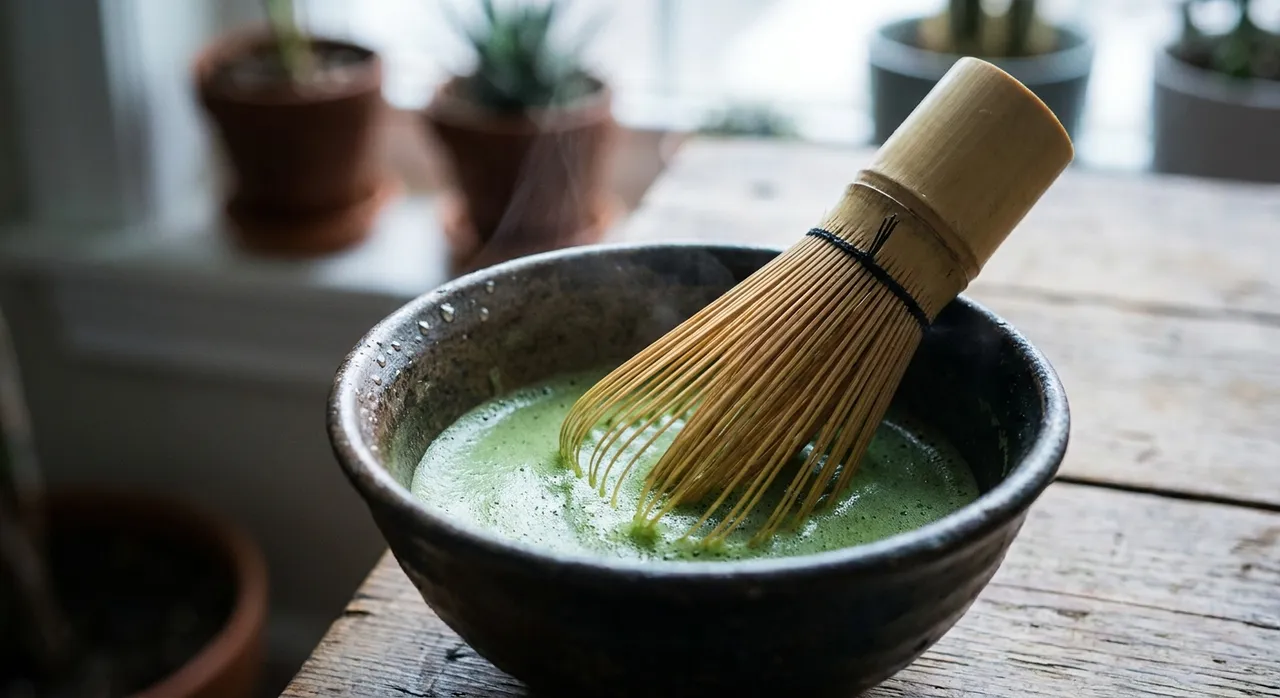
- Whisk hard for 20–30 seconds. Use a bamboo matcha whisk if you have one, a little electric frother if you don't, or a lidded jar and a good shake. You want it smooth and lightly frothy with no clumps at the bottom.
- Top with cold water (and milk, if using). Pour in the remaining 8 oz. For iced, fill the glass with ice and pour over.
- Finish with citrus. Squeeze in the lemon or lime and stir. Add the touch of honey now if you want it a little rounder. Taste and adjust.
That's it. The whole thing is quicker than waiting for a pour-over to drip.
A warm version for cold mornings
When it's grey out, I skip the ice and the citrus and go cozy instead: bloom the scoop in 3 oz warm water, whisk, then top with 6 oz hot water and 3 oz steamed or warmed milk. A tiny pinch of extra cinnamon on top is very good and very optional.
Honest note: the flavor is earthy and green with a little tang — think matcha with a garden edge, not a milkshake. If that's not your thing on day one, the citrus and a small amount of honey do a lot, and most people I've handed it to come around by the third cup.
When I drink it, and what to actually expect
I make this around 9:30 or 10 a.m. — right where the old second-coffee slump used to hit. The way I'd describe the effect matches what shows up over and over in our reviews: not a jolt, but a lifting of the fog. One customer called it "calm, steady energy, better focus, and great hydration," and that "steady" is the operative word. It comes on gently and it doesn't drop out from under you. As another reviewer put it, it's energy "without any sort of crash."
A few practical things I've learned testing this in my own kitchen:
- Drink it with or after a little food if you're sensitive to caffeine on an empty stomach. It's gentler than coffee, but everyone's different.
- Hydrate around it. A lot of "afternoon focus" is just water you forgot to drink. Building a full glass into the recipe is half the point.
- Give it a week. The adaptogen ingredients like ashwagandha and rhodiola are studied over days and weeks, not minutes. The calm-focus feel from the theanine-and-matcha side shows up same-day; the steadier baseline builds.
If you're on the fence about whether a "focus drink" is just repackaged caffeine — fair skepticism, I had it too — the honest answer is that the caffeine here is real but modest (it's green tea, not an energy shot), and the whole design is about pairing it with things that keep it smooth. That's the difference you're tasting, and feeling, at 11 a.m.
These statements have not been evaluated by the Food and Drug Administration. This product is not intended to diagnose, treat, cure, or prevent any disease. The research cited above describes individual ingredients studied on their own, not this finished product, and individual results will vary. If you're pregnant, nursing, taking medication, or managing a health condition, talk with your healthcare provider before adding a new supplement to your routine.
Renee develops recipes at Superfoods Company and has been a two-cups-before-noon coffee drinker for twenty years. Every recipe here gets tested in her own kitchen first.
Ready to try it for yourself?
Shop Superfoods Company