The Steady Hum: What a Stick Pack of Creatine Prime+ Actually Does to My 3 P.M.

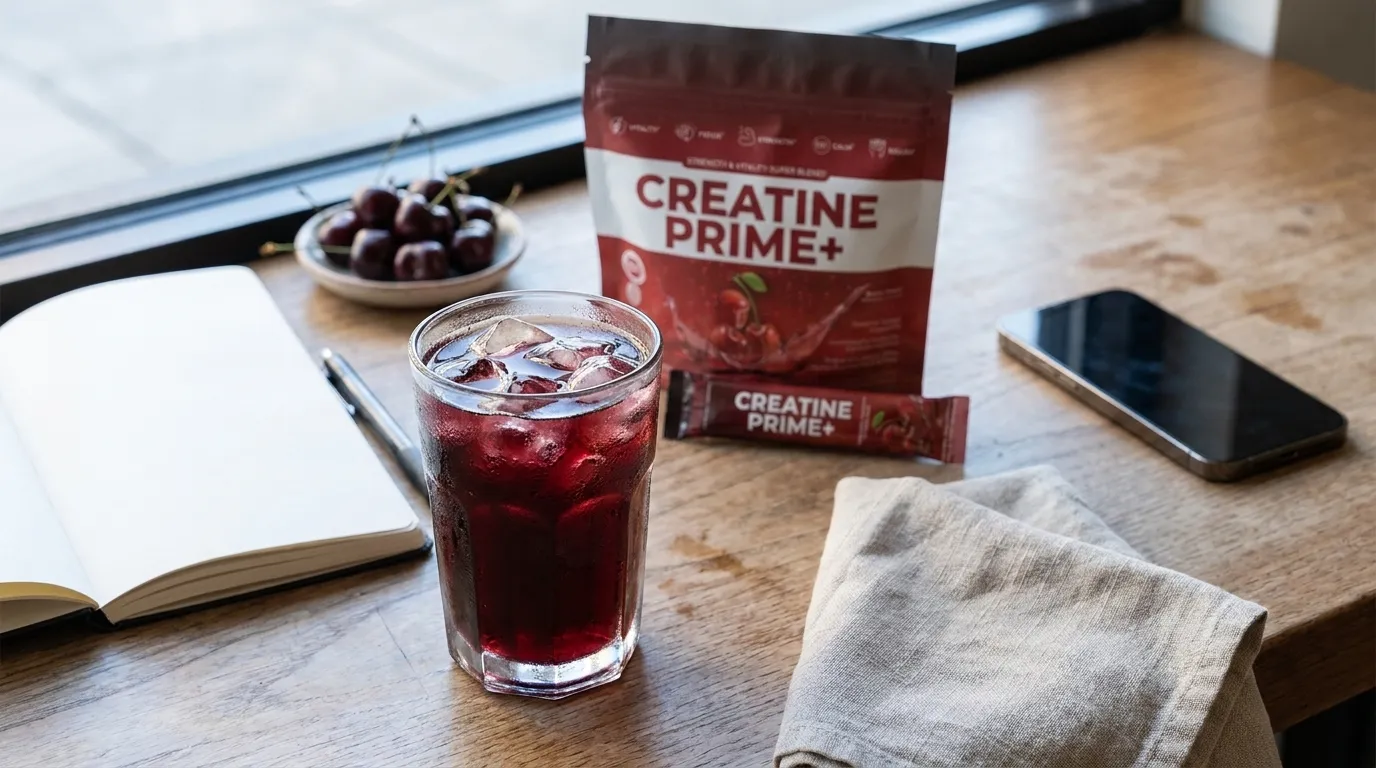
I test recipes for a living, which means my afternoons are a blur of tasting spoons, timers, and second drafts. For twenty years my fix was the same: coffee, and more coffee. Two cups before noon, then a third around 3 p.m. that I always regretted by bedtime. So I want to be upfront about what changed — and what didn't — when I started reaching for a stick pack instead of that third cup.
This isn't a hype piece. It's a how-to, written for two kinds of people: those who already have Creatine Prime+ in the cupboard and want to actually feel the benefits, and those still deciding whether it's worth it. Let me walk you through what a real day looks like.
First: what's actually in the pack (and why it matters)
Two ingredients. That's it. Creatine Monohydrate and Rhodiola (the RhodioPrime 6x extract). No caffeine, no filler, no long label you need a chemistry degree to read.
Here's the short version of why those two. Creatine's whole job in the body is fast energy. It replenishes ATP, the cell's rapid energy currency, and because the brain is metabolically demanding, topping up creatine stores gives neurons a bigger energy buffer for tasks like memory and attention. Monohydrate specifically is the version researchers keep coming back to — the International Society of Sports Nutrition position stand describes it as extensively studied and well tolerated long-term.
Rhodiola is the quieter partner. It's an adaptogen, and its actives (rosavins and salidroside) work on the stress response. In one classic study — the SHR-5 trial on physicians working night duty — a standardized rhodiola extract improved mental performance and reduced the feeling of fatigue under demanding, tiring conditions. Which, if you've ever tried to write a recipe at 4 p.m. on four hours of sleep, is the exact window I care about.
So: creatine handles the raw energy currency; rhodiola helps your body cope with the load. That's the logic. Now the practice.
How I actually use it — the boring routine that works
The single biggest thing I'll tell you is this: creatine is not a pre-workout. It doesn't hit like caffeine, and if you're waiting to "feel it" the way you feel an espresso, you'll be disappointed. It works by saturation — you take it every day, your levels build up, and the benefits show up quietly over a couple of weeks.
My rhythm:
- One stick pack a day. A 5-gram serving is the dose the research uses, and studies apply that same 3–5 gram daily range to both men and women, with 5 grams appropriate for most.
- Same time every day. Timing barely matters for creatine — consistency is what builds saturation. I pair it with a habit I already have (my mid-morning glass of water) so I don't forget.
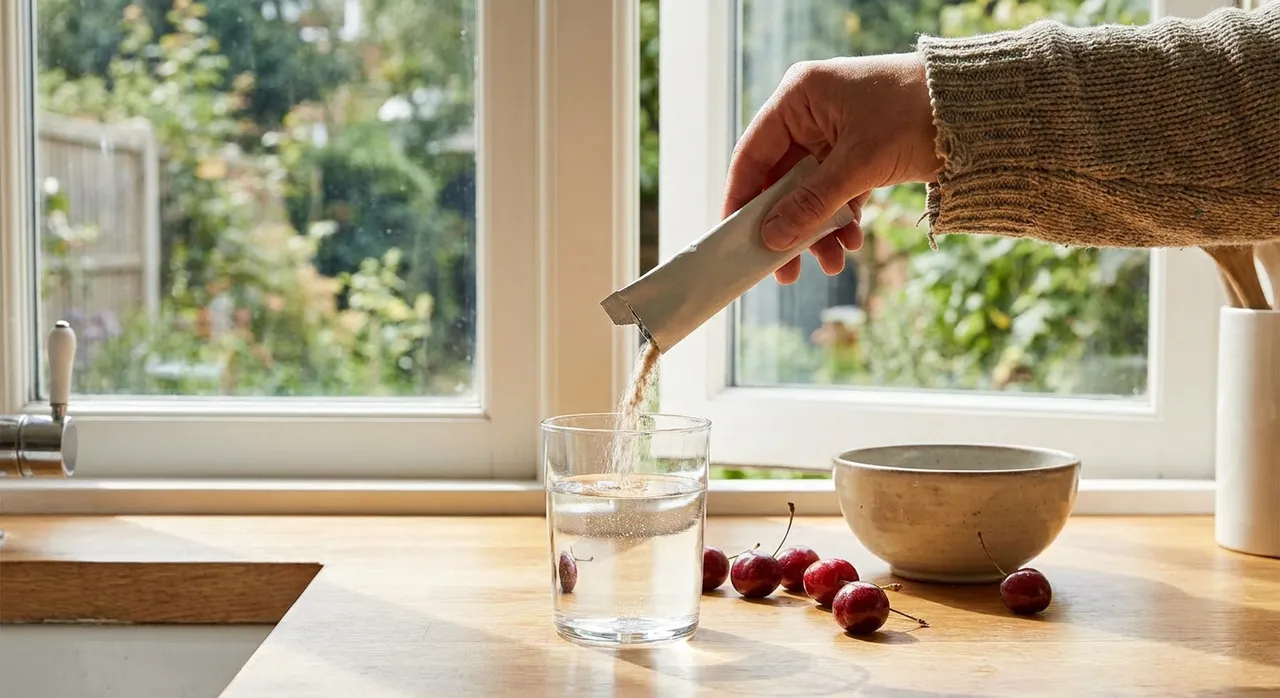
- Cold water, real glass, quick stir. It mixes in seconds. One reviewer put it better than I could: "This mixes instantly and tastes better than I expected." The Black Cherry is genuinely easy to drink — "not overly sweet," as another put it, which for a flavor person is high praise.
No loading phase required. You can front-load with a larger split dose for the first few days if you want to saturate faster, but honestly? I didn't bother. One pack a day and a little patience got me there.
What the benefits actually feel like
Here's the honest part. None of this arrives like a lightning bolt. The best description I've read from our reviews is "It's been a small but real help for me," and that's exactly the register we're in. Small, but real. Here's how each benefit showed up for me and where the research backs it.
Smoother recovery
The day after a harder workout used to mean stiff legs and a grumpy start. That eased. Creatine increases the muscle's phosphocreatine pool, which lets muscle cells regenerate ATP faster during effort — and combined with regular training, meta-analyses in older women have linked it to real gains in strength and lean tissue. A reviewer summed up the feel of it: "I've noticed my recovery feels smoother after workouts."
Steadier energy through busy days
This is the one I noticed most. My afternoons stopped having that sharp dip. Because creatine keeps phosphocreatine topped up, it acts as a steady energy buffer for muscles and brain — no caffeine, no jitters, no crash. One customer's phrase stuck with me: "Feels like my body handles busy days a little better." Same. That's the whole reason I could drop the 3 p.m. coffee.
Clearer, steadier focus
Not a wired, buzzy focus. A calmer one. Reviews of creatine and cognition in aging found positive effects particularly in memory and attention, and rhodiola pulls its weight here too under stress. The way people describe it in our reviews is understated and accurate: "My mind feels a bit clearer throughout the day," and "I just feel steadier and more focused lately."
The stuff that just makes it stick
Benefits only matter if you actually take the thing. The single-serve packs are why I'm consistent — "No mess, no measuring, which I appreciate," as one review put it. I throw a few in my bag before a shoot. "The stick packs are super convenient" is a small point that turns out to be the whole game.
Honest caveats, because you deserve them
- Give it two to four weeks. Saturation takes time. If you quit after three days because you "didn't feel it," you quit too early.
- Drink your water. Creatine pulls a little water into muscle, so stay hydrated — it also just helps everything mix and go down easy.
- It's a supplement, not a personality transplant. The gains are the "small but real" kind. If someone promises you a transformation from a stick pack, be skeptical.
- Consistency beats dose games. One pack, every day, is worth more than a perfectly timed pack you take three times a week.
If you're on the fence: this is about as low-risk as supplements get. Two well-studied ingredients, no stimulants, and a flavor you'll actually finish. If you already own it, the takeaway is even simpler — take it daily, be a little patient, and let the afternoons quiet down on their own.
These statements have not been evaluated by the Food and Drug Administration. This product is not intended to diagnose, treat, cure, or prevent any disease. The research cited above describes the individual ingredients, creatine monohydrate and rhodiola, and not the finished Creatine Prime+ product. Individual results vary. If you are pregnant, nursing, taking medication, or have a medical condition, talk with your healthcare provider before starting any supplement.
Renee develops recipes at Superfoods Company and has been a two-cups-before-noon coffee drinker for twenty years. Every recipe here gets tested in her own kitchen first.
Ready to try it for yourself?
Shop Superfoods Company