The Fizz Is Doing More Than You Think: The Science of Superfood Effervescent Tablets

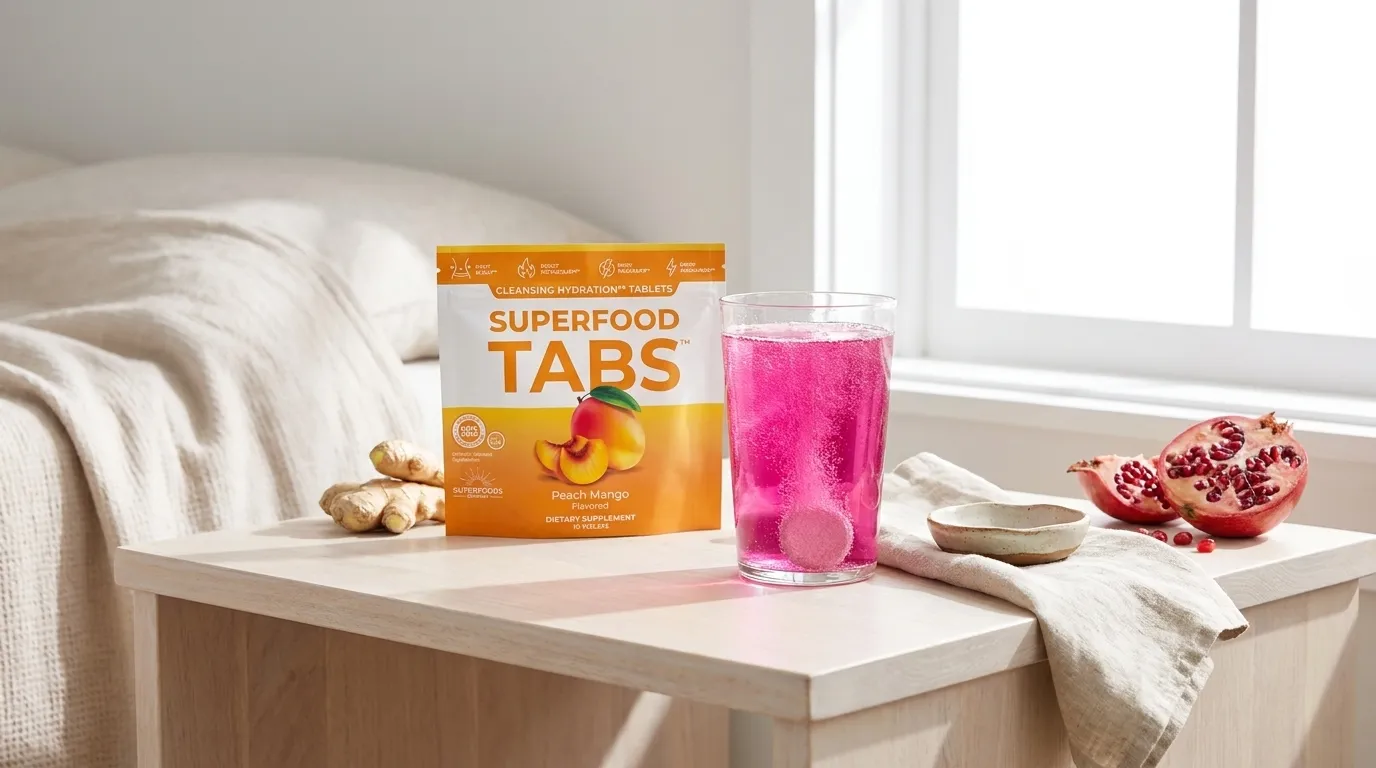
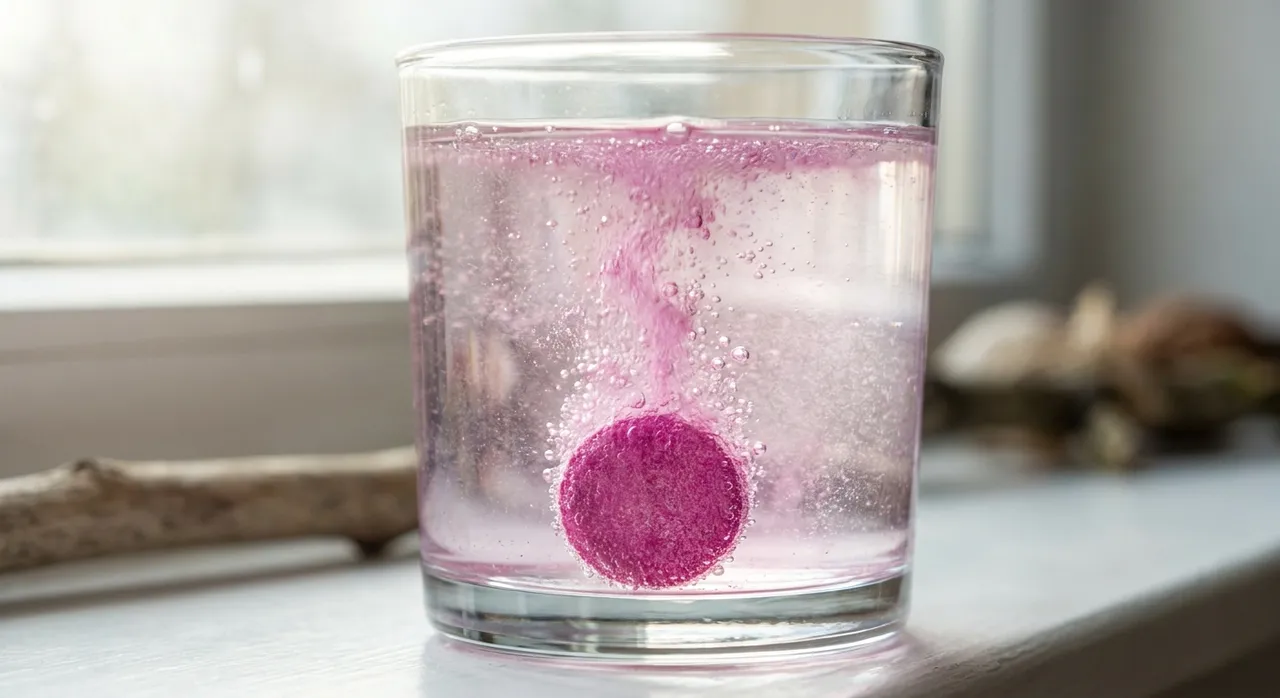
The first time I dropped a superfood tab into a glass of water, I stood there and watched it like a kid with a bath bomb. The tablet sank, paused, then erupted into this rolling column of bubbles that turned the water a deep beet-magenta in about ninety seconds. I'm a dietitian. I should be above being charmed by fizz. I was not.
But here's the thing I tell people who ask me whether the bubbles are just a gimmick: they're not. The effervescence is chemistry doing a job. And once you understand what that job is, the whole format makes a lot more sense than another bottle of capsules sitting in your cabinet. So let me walk you through what's actually happening in that glass — and what the ingredients are doing once you drink it.
What the fizz actually is
The bubbles come from a deliberately simple reaction. An effervescent tablet pairs a food-grade acid (think citric acid) with a carbonate base. The instant they hit water, they react and release carbon dioxide — that's your fizz — while the rest of the tablet breaks apart and dissolves into solution. No swallowing a dense, compressed pill that has to disintegrate slowly in your stomach. By the time you drink it, the nutrients are already dispersed in water.
Why does that matter? Because dissolution is the rate-limiting step for a lot of compounds. Superfood Tabs skip that step before the drink ever reaches your lips. As one explainer on the format puts it, research suggests faster processing and reduced stomach irritation compared to traditional tablets, and fizzy vitamins distribute evenly in your digestive tract, with absorption potentially improving when nutrients arrive already dissolved in water.
I want to be honest about the numbers floating around the internet here, because some of them get oversold. You'll see claims that liquid formulations can achieve up to 90% absorption compared to 20-30% for some solid tablets. Those figures come from specific compounds in specific studies — they're not a universal law, and the real answer depends on the nutrient, your gut, and what you ate. The honest, defensible version is the one supported across the literature: research published in the European Journal of Pharmaceutical Sciences found that effervescent formulations significantly improve drug dissolution rates and bioavailability compared to conventional solid dosage forms. Better dissolution, more even dispersion, gentler on the stomach. That's the real win.
The format's job is simple: get the active compounds into solution before they hit your gut, so your body isn't waiting on a pill to break down.
A note on hydration, since it's hiding in plain sight
The unglamorous part of the science is that you have to drink a full glass of water to take one. That's not a side note — for a lot of our customers it's the whole point. One reviewer told us it "makes daily hydration easy," and another said it "became a non negotiable" in her routine. The tablet is the reason the water gets drunk. I've watched this play out with my own clients: the ritual carries the habit.
What's dissolved in the glass
The format is the delivery truck. The cargo is what I actually care about. Our blend runs sixteen-plus plant ingredients — burdock root, milk thistle, matcha, beet root, pomegranate, chlorella, dandelion, ginger root, elderberry, lemon balm, green tea, ginseng, wheat grass, aloe vera, goji berry — plus 100mg of caffeine from green tea leaf extract. I'm not going to pretend every one has a stack of trials behind it. But several of the headliners do, and that's where the science gets interesting.
Green tea catechins: thermogenesis and fat oxidation
This is one of the better-studied ingredients in the whole pouch. The active catechin, EGCG, inhibits an enzyme called catechol-O-methyltransferase, which prolongs norepinephrine signaling and nudges up thermogenesis and fat oxidation. In plain English: it helps your body burn a little more, a little longer. A GRADE-assessed dose-response meta-analysis of randomized trials, The effects of green tea extract supplementation on body composition, obesity-related hormones and oxidative stress markers, found green tea extract lowered body mass, BMI, and body-fat percentage while raising adiponectin. A second meta-analysis, Effect of green tea catechins with or without caffeine on anthropometric measures, points the same direction. And because catechins induce antioxidant enzymes and scavenge free radicals, the heart benefits too — meta-analyses of overweight and obese populations show green tea catechins lowering triglycerides and raising HDL.
Ginger: the digestion and waistline workhorse
Ginger earns its place twice. Gingerols and shogaols increase thermogenesis and fat oxidation and improve insulin sensitivity; a GRADE-assessed meta-analysis of 27 randomized trials, Ginger intervention on body weight and body composition in adults, found ginger reduced body weight, BMI, waist circumference, and percent body fat. It also settles the stomach. Those same compounds act as 5-HT3 receptor antagonists and speed gastric emptying, which is why the comprehensive review Ginger on Human Health: A Comprehensive Systematic Review of 109 Randomized Controlled Trials reports it consistently relieves nausea. That review also documents ginger lowering inflammatory markers like C-reactive protein and TNF-α. For an ingredient people associate with ginger ale, that's a serious résumé.
Pomegranate: blood pressure and antioxidant capacity
Pomegranate polyphenols inhibit serum angiotensin-converting enzyme (ACE) activity — the same target a whole class of blood pressure drugs hits — and meta-analyses of randomized trials (Effects of pomegranate juice on blood pressure) report meaningful reductions in both systolic and diastolic pressure. It also carries one of the highest antioxidant capacities of any fruit, thanks to tannins, anthocyanins, and ellagic acid derivatives. The ellagitannins get converted by your gut into urolithins, which support fat metabolism; clinical reviews like Pomegranate and Metabolic Syndrome Risk Factors report reductions in body weight and waist measures alongside better metabolic markers. That deep magenta color you're watching swirl? That's the polyphenols.
Ginseng and lemon balm: energy and calm, from two directions
The 100mg of caffeine gives you the obvious lift, but ginseng is doing quieter work underneath. Ginsenosides modulate the HPA axis and support cellular energy production — a randomized, double-blind, placebo-controlled trial, Antifatigue Effects of Panax ginseng, found it significantly reduced mental and physical fatigue in people with chronic fatigue. A cognition trial showed a single 200mg dose improved mental arithmetic and reduced mental fatigue. There's even a weight angle: in Influence of Panax ginseng on obesity and gut microbiota in obese middle-aged Korean women, eight weeks of ginseng produced significant drops in body weight and BMI, with effects that varied by gut bacteria.
On the other end, lemon balm. Its rosmarinic acid inhibits GABA transaminase, raising calming GABA tone. A randomized placebo-controlled trial in surgical patients found 1.5g/day reduced anxiety by roughly 49% and improved sleep quality by about 54%. The weight connection here is indirect but real: chronic cortisol drives abdominal fat storage and cravings for comfort food, so calming the stress response can take the pressure off stress-eating. That's why several of our customers mention "no more sugar craving or want to eat snacks" — fewer cravings is a recurring theme in the reviews.
What people actually report
Mechanisms are my world, but I'd be a bad scientist if I ignored the outcomes data sitting in our own review pile. The pattern is consistent: clean, steady energy without jitters; less bloating; a lighter middle; and weight management that sticks. The numbers people share are not small.
- "They have helped me lose over 60 pounds and I have kept it off for over 2 years."
- "Lost 78 lbs and gained energy... What more could you ask for!"
- "I AM DOWN FROM 265 TO 202. I LOVE LOVE TAKING SUPERTABS DAILY."
- "I can tell by the fit of my clothes" — "my clothes are a little looser in the waist."
I always add the dietitian's footnote to testimonials like these: they're real, but they're people, not controlled trials. What I find encouraging is that the direction of the reviews lines up with the direction of the ingredient research — thermogenic catechins and gingerols, appetite-and-stress support from lemon balm, steady non-jittery energy from a modest caffeine dose paired with ginseng. The science and the stories rhyme. They don't prove each other, but they rhyme.
How I'd actually use it
If you want the format to do its job, a few practical things:
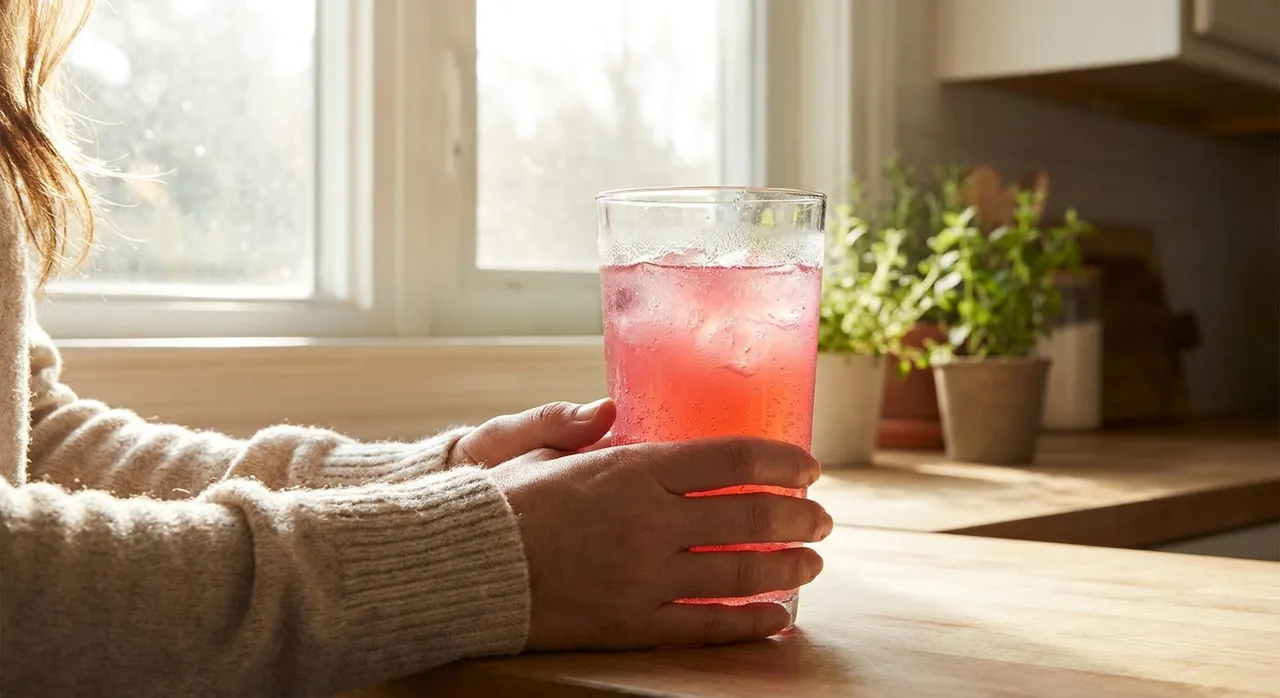
- Use a tall glass — about 10 to 12 ounces of cold water. More water, better dispersion, and you get the hydration win.
- Let it fully finish fizzing before you drink. Roughly 90 seconds. Half-dissolved means half-dispersed.
- Anchor it to something you already do. I drink mine while the coffee's brewing. The customer who called it her "non negotiable" had it tied to a morning routine, and that's not a coincidence.
- Mind the caffeine. 100mg is roughly a cup of coffee — lovely in the morning, less lovely at 9pm if you're sensitive.
The fizz charmed me on day one. The science is why I kept it in my own routine — and why I'm comfortable putting my name on it.
These statements have not been evaluated by the Food and Drug Administration. This product is not intended to diagnose, treat, cure, or prevent any disease. The studies referenced above describe research on individual ingredients, not on this finished product, and individual results — including the customer experiences quoted here — vary. Talk with your healthcare provider before starting any new supplement, especially if you are pregnant, nursing, taking medication, or managing a health condition.
Priya is a registered dietitian who reviews the science behind every ingredient we use. She spends her days turning clinical research into plain English.
Ready to try it for yourself?
Shop Superfoods Company