Why "Jitter-Free" Coffee Isn't Just Marketing: The Chemistry of Instant Coffee With Superfoods

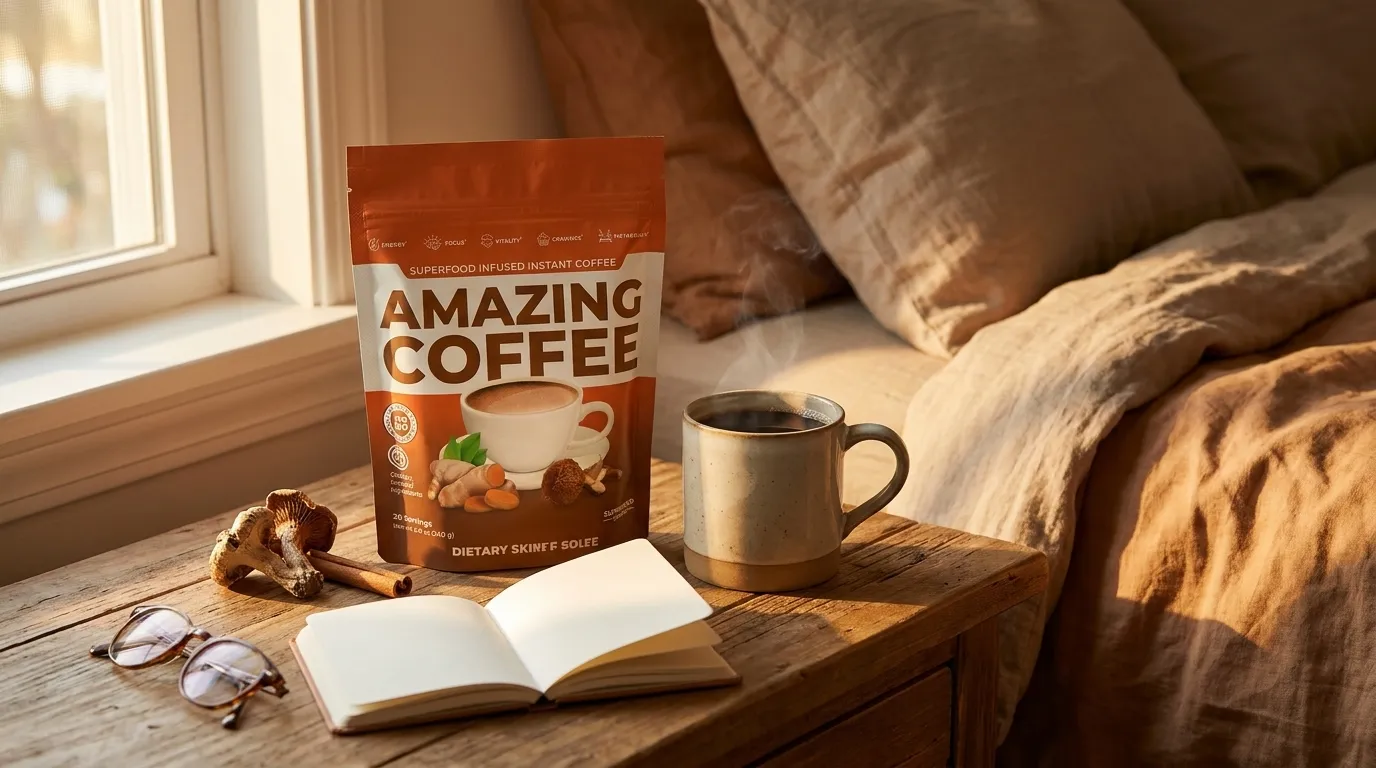
I keep a coffee log. I know — occupational hazard. But years of reading clinical papers turned me into the kind of person who jots down "9:10am, one cup, focused til noon, no 2pm slump." For most of my regular-coffee life, that log had a recurring villain: the crash. Big lift around 9:30, then a flat, irritable hole by early afternoon that I'd patch with a second cup I didn't really want.
When people ask me about instant coffee with superfoods — and they ask a lot, because the category has exploded — they usually want to know one thing. Is the "energy without the jitters" claim real chemistry, or is it just a nicer label? So let me answer the way I'd answer a patient: with the mechanisms, the honest caveats, and what it actually feels like in a cup.
First, what does "superfood coffee" even mean?
Here's a caveat I lead with every time. There is no regulated definition of a superfood. There is no official FDA definition of what a superfood is or the numerous health benefits it might provide, and Merriam-Webster defines it as a food rich in compounds such as antioxidants, fiber, or fatty acids considered beneficial to a person's health. So "superfood" is a marketing word doing a science job. Useful, but you have to look under it.
What's actually under it, in the better products, is a blend of functional ingredients. Amazing Coffee is a delicious blend of premium French roast coffee and 12 natural, plant-based superfoods including adaptogen mushrooms like cordyceps, shiitake and chaga. That word "adaptogen" matters, and we'll get to it. The broader trend is real, too — the rise of superfood coffee has reshaped the coffee industry, blending health-boosting ingredients like mushrooms, turmeric, and cinnamon into everyday coffee, as demand for functional beverages grows.
Our full lineup in Amazing Coffee, for the record: Chaga, Turmeric, Cordyceps, Shiitake, Maca Root, Green Coffee, Matcha, Ginseng, Cinnamon, Ginger Root, Green Tea, Cocoa, and yes — regular Caffeine. Thirteen things working different angles. Let me group them by what they're actually doing.
The "no crash" mechanism is the most interesting part
This is the benefit our reviews mention more than any other. One customer put it bluntly: "Never a crash feeling like coffee." Another said, "I'm losed 5 pounds already in 2 weeks!!! You can see results quick!!!" (Their typos, kept on purpose — I'd rather show you the real thing.)
So why would a coffee crash less? Two reasons, and they stack.
Reason one: less caffeine per unit, and slower delivery. Mushroom-forward blends generally run lower on caffeine than a double espresso. Coffee provides caffeine, which can be very energizing, but too much caffeine may make many people jittery or cause a crash as soon as the effects wear off — and mushroom coffees tend to have less caffeine, leading to a less abrupt crash. Less spike, less valley. Simple physics of a curve.
Reason two — and this is the one I geek out about — green tea and matcha bring L-theanine. L-theanine is an amino acid found in tea leaves that takes the sharp edge off caffeine. It's the reason a cup of green tea feels "alert but calm" rather than "wired." When you put caffeine and L-theanine in the same cup, you tend to get the focus of the caffeine with a smoother, steadier feel. Our blend carries both Matcha and Green Tea, which is not an accident.
The reviews track with the chemistry. One person told us, "I literally stopped taking my Adderall last yr, and replaced it with Superfoods Amazing coffee." I want to be very careful here: I am not telling you to stop a prescribed medication, and neither is that reviewer's experience a recommendation — talk to your doctor about anything you're taking. But it tells me the steady-focus effect is landing for real people, not just on a spec sheet.
What "adaptogen" actually means (and where the evidence is honest)
Adaptogens are the buzziest word in this whole category, so let's define it properly rather than wave our hands. The idea is a class of plant and fungal compounds meant to help the body modulate its stress response instead of amplifying it. The Cordyceps, Chaga, Shiitake, Ginseng, and Maca in our blend fall in this family.
Here's where I stay grounded. The clinical work on these ingredients is promising but still maturing, and most of it studies the isolated ingredient, not a finished coffee. With that framing, here's what the research describes:
- Cordyceps and exercise: in a double-blind, placebo-controlled trial (Cordyceps sinensis improves exercise performance in healthy older subjects), cordyceps compounds appear to support mitochondrial function and oxygen utilization during physical activity. That's the "energy" angle with an actual mechanism — ATP production — behind it.
- Chaga and antioxidants: work like Antioxidant properties of water and ethanol extracts of Inonotus obliquus describes chaga's melanin, phenolic compounds, and superoxide dismutase helping neutralize free radicals and reduce oxidative stress.
- Shiitake and immunity: Consuming Lentinula edodes (Shiitake) Mushrooms Daily Improves Human Immunity, a randomized dietary intervention in healthy young adults, ties shiitake's beta-glucan lentinan to immune-cell activation.
- Shiitake and cholesterol: Hypocholesterolemic effect of eritadenine from shiitake mushrooms identifies eritadenine, a compound that inhibits cholesterol synthesis in the liver.
The non-mushroom workhorses: turmeric, cinnamon, ginger, cocoa
People fixate on the mushrooms, but the spices and cocoa in here are doing real lifting, and frankly they make the cup taste like something you'd actually want at 7am.
Turmeric is the heavyweight on the anti-inflammatory side. Its active compound, curcumin, was strong enough that one trial — Efficacy and safety of Curcuma domestica extracts compared with ibuprofen in patients with knee osteoarthritis — measured it against a standard anti-inflammatory drug, working through pathways like NF-κB and COX-2. There's also intriguing brain data: Memory and Brain Amyloid and Tau Effects of a Bioavailable Form of Curcumin in Non-Demented Adults, an 18-month double-blind, placebo-controlled trial, looked at curcumin and cognition. I'd call that a watch-this-space result, not a promise.
Cinnamon and cocoa are along for both flavor and function. Cinnamon is rich in vitamins and minerals and supports healthy blood sugar levels, and is also great for helping maintain healthy cholesterol and triglyceride levels. And cocoa earns its spot honestly — research shows the content of phenolic antioxidants in cocoa is higher than any other food, it has anti-inflammatory properties that may protect the skin from UV radiation, and it has been shown to improve cognitive function and enhance mood.
About the appetite and weight reviews — what's plausible, what's not
This is the benefit second only to "no jitters" in our reviews. "I last 15 pounds without starving and workouts," one wrote. Another said, "It really does curb your appetite. You need to allow it to work, after you drink your cup just relax and feel the fullness!!"
I love that second quote because it's accidentally good advice. Caffeine has a mild, well-documented appetite-blunting effect, and a warm drink plus a few quiet minutes genuinely helps you notice fullness signals instead of bulldozing past them. Is it magic? No. There's no pill — or cup — that overrides energy balance. But a low-calorie morning ritual that takes the edge off cravings and replaces a pastry run? That's a sensible, sustainable nudge, and that's how I'd frame it for any client.
How I'd actually drink it (my morning protocol)
Since I'm asking you to think like a scientist, here's the simple version I use:
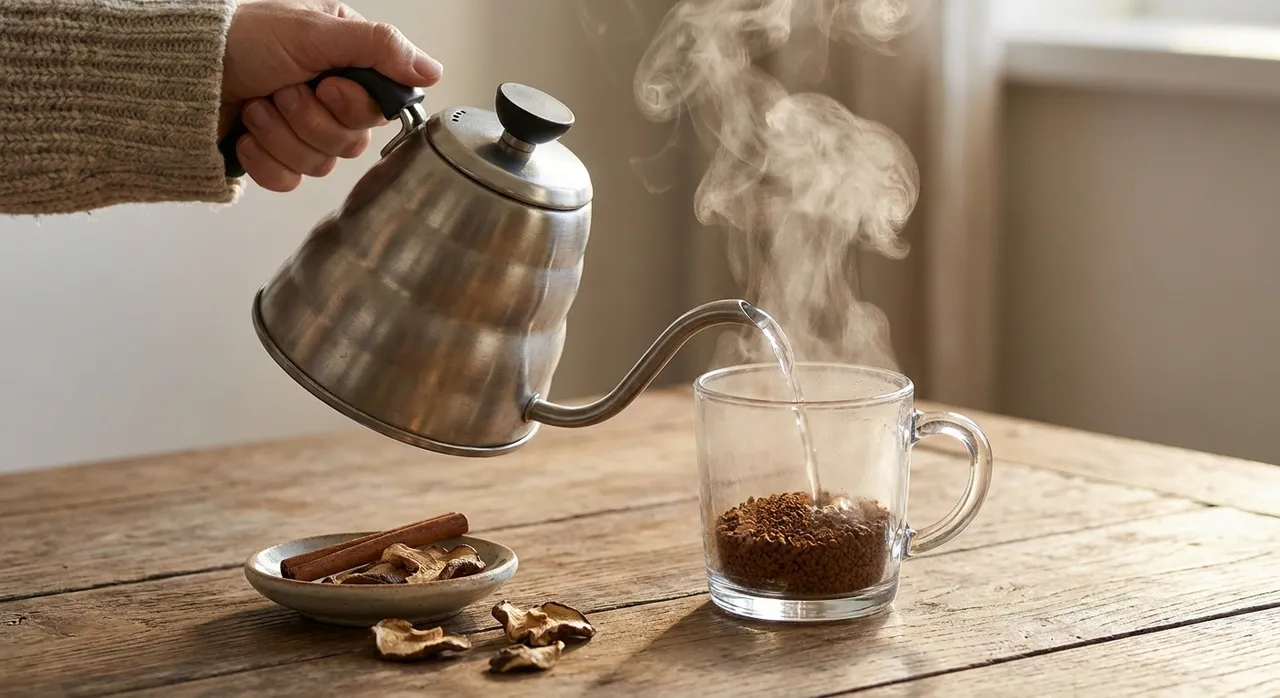
- One single-serve packet or one rounded teaspoon into a mug.
- Add 8–10 oz of hot water (around 195°F — just off a boil), or cold water and ice for an iced version.
- Stir 20–30 seconds until fully dissolved. It's instant, so it's quick.
- Optional: a splash of milk or a half-teaspoon of extra cinnamon. I skip sugar — the cocoa and cinnamon carry it.
- Then — per that wise reviewer — sit for five minutes before you decide you're hungry.
One reviewer summed up the loyalty I see in the data: "This is by far my favorite coffee, I will not drink anything else!" And another, my favorite, "My only regret is that I did not do this sooner."
The honest bottom line
Instant coffee with superfoods isn't a miracle, and I'd be a poor dietitian if I sold it as one. What it is: a low-effort, low-calorie way to combine caffeine with a stack of ingredients that have real, mechanism-level research behind them — antioxidants from chaga and cocoa, the smoothing effect of tea-derived L-theanine, anti-inflammatory curcumin, and adaptogenic mushrooms with genuinely interesting early data. Lower spike, gentler landing, and a cup you look forward to. If you already drink it, that "no crash" feeling you noticed is the chemistry, not your imagination.
These statements have not been evaluated by the Food and Drug Administration. This product is not intended to diagnose, treat, cure, or prevent any disease. The studies referenced here describe the properties of individual ingredients, not the finished Amazing Coffee product, and individual results may vary. Nothing here is medical advice — talk to your healthcare provider before changing your diet, supplements, or any medication.
Priya is a registered dietitian who reviews the science behind every ingredient we use. She spends her days turning clinical research into plain English.
Ready to try it for yourself?
Shop Superfoods Company