The Slow-Sip Iced Latte That Keeps Me Level Until Lunch

The first time I noticed the difference, I was standing at my counter at 10:15 a.m. holding a measuring spoon and realizing my hand wasn't buzzing. For twenty years my mornings ran on two cups before noon, and for most of those years the second cup came with a familiar 10 a.m. tremor — that fine little shake when you're pouring and the coffee ripples in the cup. I'd stopped questioning it. I thought it was just what coffee did.
It isn't. And once I understood why coffee gets jittery, I started building my morning drink around avoiding it. This iced latte is the result. It's the one I make almost every day now, tested in my own kitchen more times than I can count, and it's the closest I've come to "energy without a crash" in a glass.
Why coffee makes your hands shake in the first place
Two things are usually going on, and neither is a mystery. The first is dose. The jittery effects of caffeine are the result of methylxanthine, a naturally occurring substance; caffeine is the main methylxanthine in coffee, and it has stimulating effects on our central nervous systems. Push that stimulation too far and you get the classic combo — shaky hands, a rapid heart rate, and an underlying sense of anxiety, side effects often from consuming high levels of caffeine.
The second thing is how fast the caffeine hits. On an empty stomach, caffeine is absorbed more quickly and reaches higher levels in your blood; eating some food with coffee can slow down absorption and smooth out its effects. That spike-and-drop is the crash people describe. So the fixes are almost boringly practical: have food along with your coffee to slow absorption, and spread out your caffeine intake instead of chugging two cups in one sitting.
Here's the part I find genuinely interesting, and it's the reason I use a blend instead of plain coffee. You can also change the company the caffeine keeps. According to research published in the Journal of Nutritional Neuroscience, the combination of 97 mg caffeine with 100 mg L-theanine significantly improved attention and accuracy on cognitive tasks compared to caffeine alone. L-theanine is the amino acid you find in green tea and matcha. The commonly cited target for smooth focus is a 2:1 ratio — roughly 100–200 mg L-theanine with 50–150 mg caffeine, taken together, keeping total daily caffeine under 400 mg and avoiding it within 6–8 hours of bedtime.
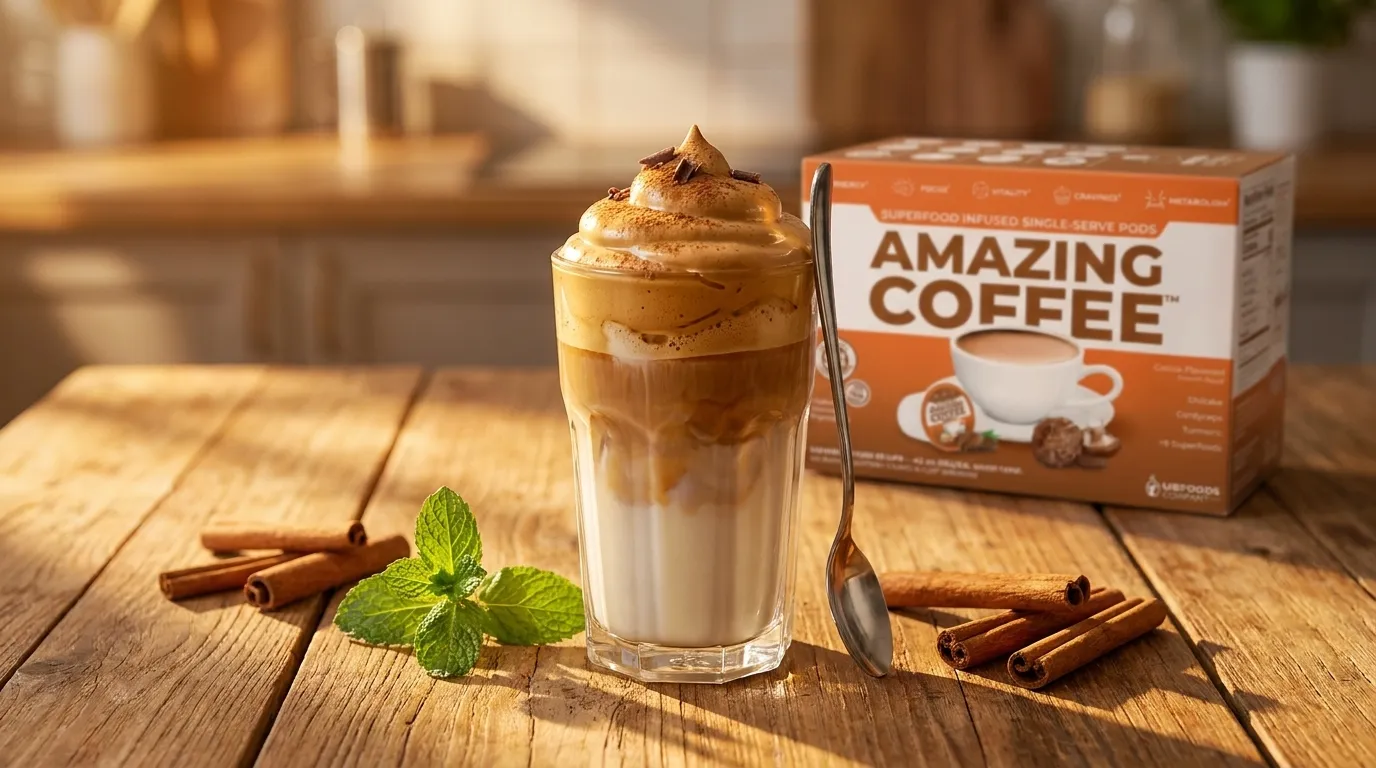
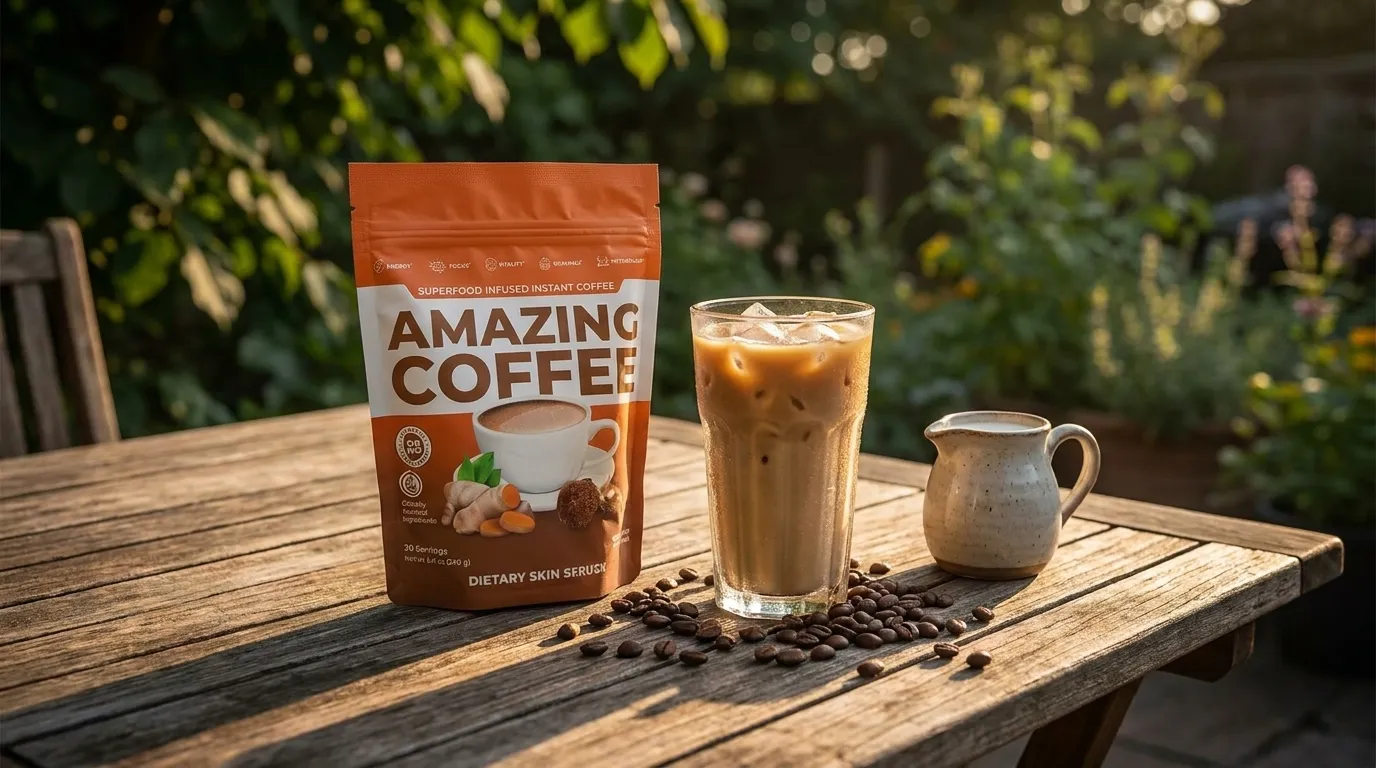
That's the whole strategy: moderate the dose, slow it down, and pair the caffeine with calming compounds. My Amazing Coffee already does the pairing part — it's a blend of Green Coffee, Matcha, Green Tea, and a little Caffeine alongside functional ingredients like Cordyceps, Chaga, Maca Root, and Cinnamon. So my job in the recipe is to handle the rest: no empty stomach, no chugging, and a big glass of ice to slow me down.
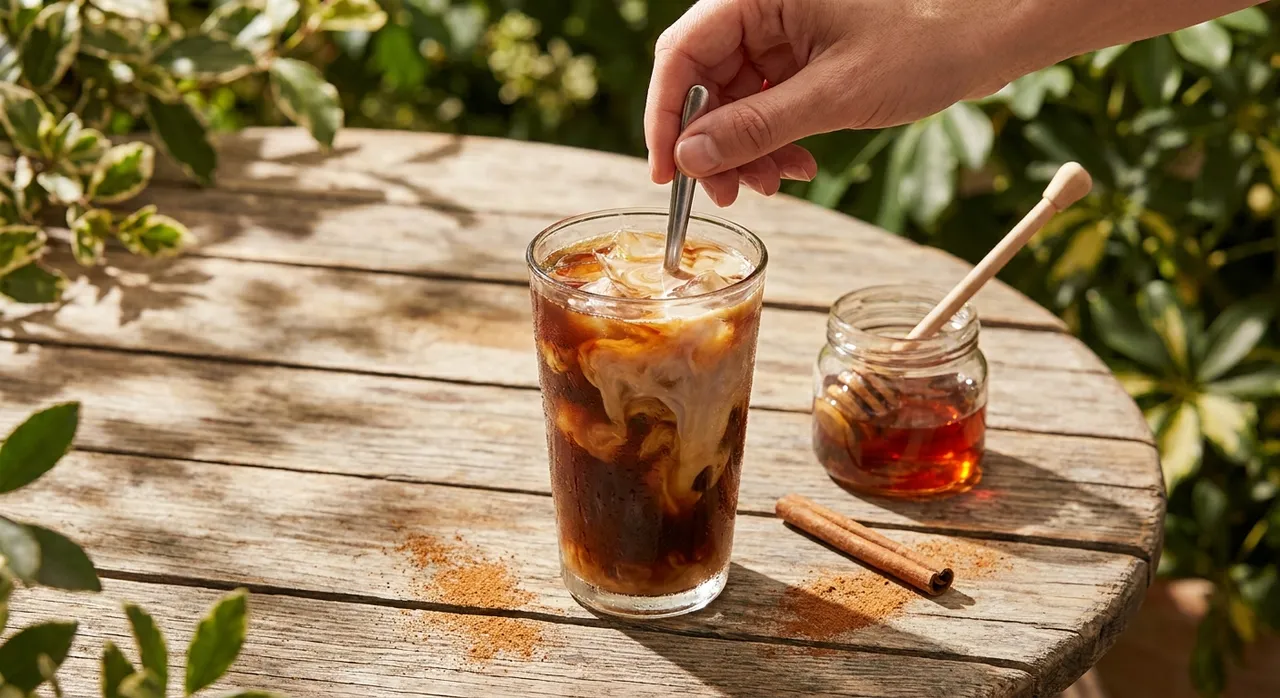
The Slow-Sip Iced Latte
This makes one tall drink, about 14 oz over ice. It takes maybe four minutes. The "slow-sip" name is not decorative — the point is a large, cold, lightly sweetened drink you nurse over 20 minutes instead of a short shot you slam. That pacing is doing real work.
Ingredients
- 1 heaping tsp Amazing Coffee (I use one rounded spoon; adjust to taste)
- 2 tbsp hot water (just enough to dissolve, about 150°F)
- 3/4 cup cold milk of choice (I like oat for the froth)
- 1 cup ice
- 1–2 tsp maple syrup or honey (optional)
- 1 small pinch cinnamon, plus a little for the top
- Splash of vanilla (optional, but I almost always)
Steps
- Bloom the blend. Put the Amazing Coffee in the bottom of your glass with the 2 tbsp hot water and the pinch of cinnamon. Stir 15–20 seconds until it's fully dissolved and glossy with no dry specks. This tiny bit of warmth wakes up the flavor — dumping powder straight onto ice leaves you with grit.
- Sweeten while it's warm. Add the maple syrup and vanilla now, into the warm concentrate, so they melt in evenly instead of sinking to the bottom.
- Fill with ice. Pack the glass with a full cup of ice. Cold milk on cold coffee keeps it from going watery too fast.
- Pour the milk down the side. Add the cold milk slowly over the back of a spoon so you get those layered ribbons before you stir. It looks good and, honestly, that's half of why I keep making it.
- Stir, taste, dust. Give it one good stir, taste, and add a touch more syrup only if you need it. Finish with a light dusting of cinnamon on top.
- Sip it slow. Eat something small alongside — a few nuts, toast, a boiled egg. Then, and I mean this literally, give it 20 minutes.
One reviewer put the pacing better than I can: "It really does curb your appetite. You need to allow it to work, after you drink your cup just relax and feel the fullness!!"
Why these small choices matter
The hot bloom, the food, the ice, the slow sip — none of it is fussy for the sake of being fussy. Each step is a lever on how fast caffeine reaches your blood. Slower absorption is smoother energy. That's the entire trick, and it's why customers describe it the way they do: "Never a crash feeling like coffee." One long-time drinker of mine says, "I absolutely LOVE this coffee and can not start my day without it," and another (my favorite honest line) admits, "I am totally useless without it!!!!! I have 3 or 4 every morning!!" — which is a good reminder that "under 400 mg a day" still applies to all of us.
What's actually in the cup — and what the research says about the parts
The reason I reach for this blend instead of just adding matcha to my coffee is that the functional ingredients each have their own body of study behind them. A few I find worth knowing:
- Cordyceps is the endurance one. Cordyceps contains bioactive compounds like cordycepin and polysaccharides that may improve cellular energy production by enhancing ATP synthesis and oxygen utilization, appearing to support mitochondrial function. This was studied in "Cordyceps sinensis improves exercise performance in healthy older subjects: a double-blind, placebo-controlled trial."
- Chaga brings the antioxidants. Chaga is rich in antioxidant compounds including melanin, phenolic compounds, and superoxide dismutase, which help neutralize free radicals and reduce oxidative stress throughout the body. See "Antioxidant properties of water and ethanol extracts of Inonotus obliquus."
- Turmeric is here for its anti-inflammatory side. Curcumin, turmeric's primary active compound, inhibits inflammatory pathways including NF-κB and COX-2, which helps reduce joint pain, stiffness, and swelling. Documented in "Curcumin: A Review of Its' Effects on Human Health."
- Cinnamon and Ginger mostly earn their place on flavor for me, but they also make the drink feel warming even over ice.
I'll be honest about the caveat, because I test these things and I'd want to know: the calm-energy studies above are about caffeine paired with L-theanine, not about this specific glass of latte. Individual tolerance varies wildly. If you're caffeine-sensitive, start with a smaller spoon and see how the afternoon feels before you build up. A gentler cup is easy to make stronger; a jittery one is harder to walk back.
That's the drink that finally ended my 10 a.m. tremor. As one reviewer said in a line I think about often: "My only regret is that I did not do this sooner."
These statements have not been evaluated by the Food and Drug Administration. This product is not intended to diagnose, treat, cure, or prevent any disease. The research cited above describes individual ingredients studied on their own, not the finished Amazing Coffee product, and results in those studies may not reflect what any individual experiences. Amazing Coffee is a food, not a medication or a substitute for one. Caffeine affects people differently — if you are pregnant, nursing, sensitive to caffeine, or managing a health condition, talk with your healthcare provider before making it part of your routine.
Renee develops recipes at Superfoods Company and has been a two-cups-before-noon coffee drinker for twenty years. Every recipe here gets tested in her own kitchen first.
Ready to try it for yourself?
Shop Superfoods Company