How to Get the Most Out of Ashwavana Zen Relax (A Timing Guide for Real Calm)

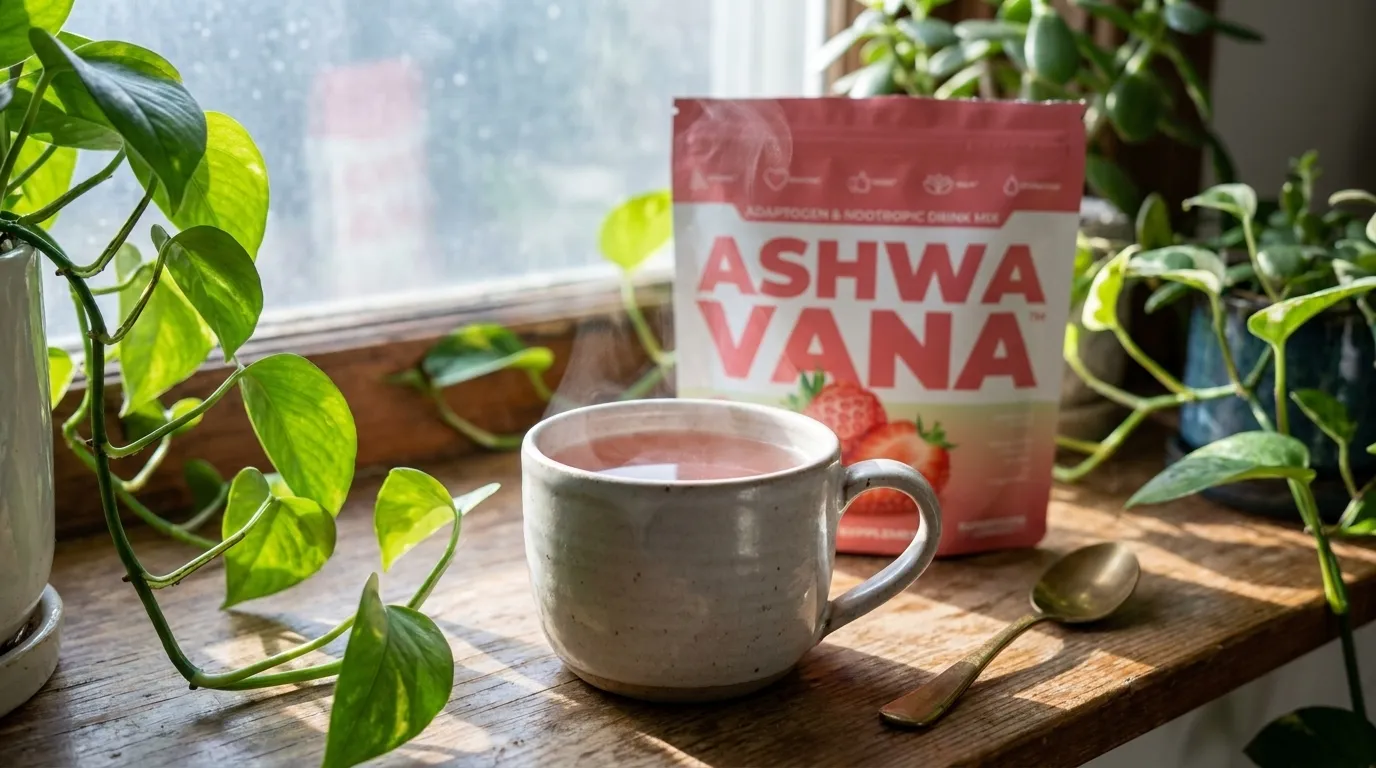
The first time I really felt it was on a Tuesday I'd already written off. Two deadlines, a recipe that curdled twice, and the specific flavor of dread that shows up around 3:47pm. I made a cup of Ashwavana Zen Relax mostly out of habit — I test it constantly, so I drink it constantly — and about forty minutes later I noticed I'd stopped clenching my jaw. Not knocked-out relaxed. Just… the volume turned down. Still sharp, still working, but calm underneath it.
That gap between "sedated" and "genuinely at ease but focused" is the whole point of this blend, and honestly, most people miss out on it because they treat the drink like a magic switch instead of a tool with a best-use window. So this is my how-to. Not the marketing version — the version from someone who's made hundreds of these mugs at her own kitchen counter and paid attention to what changed.
First, what the blend is actually built to do
Ashwavana Zen Relax stacks a short list of ingredients that each pull in the same direction: calmer nervous system, steady energy, clearer head. The three doing the heavy lifting for the "zen" feeling are ashwagandha, rhodiola, and L-theanine.
- Sensoril ashwagandha — a standardized root-and-leaf Withania somnifera extract. It works on the stress axis and lowers circulating cortisol, your body's main stress hormone. In the Clinical Trial to Study the Effects of Sensoril for Patients With Generalized Anxiety Disorder and a broader meta-analysis (Effects of Ashwagandha Supplements on Cortisol, Stress, and Anxiety Levels in Adults), it's linked to measurably lower stress and anxiety. This is the slow, foundational one — it rewards consistency more than any single dose.
- RhodioPrime 6X rhodiola — an adaptogen that helps the body push back against mental and physical fatigue. Trials like The Effects of Rhodiola rosea L. Extract on Anxiety, Stress, Cognition and Other Mood Symptoms tie it to better attention during demanding stretches. This is the one that keeps calm from tipping into sluggish.
- L-theanine — the amino acid from tea that's responsible for that "alert but not wired" feeling. It increases alpha brain-wave activity, the pattern linked to wakeful relaxation. External research is remarkably consistent here: L-theanine increases alpha wave activity within roughly 30 to 40 minutes of intake, and it's the reason caffeine in this blend (from matcha) lands as clean energy instead of jitters.
Around those three sit magnesium (nervous-system regulation, better sleep), lemon balm (a traditional calming herb whose rosmarinic acid supports GABA activity), vitamin D3, turmeric, ginger, matcha, beet root, shiitake, and a handful of antioxidant superfoods like goji, pomegranate, chlorella, and grape seed extract. It's not a single-note supplement. It's more like a small toolkit — which is exactly why timing changes what you get out of it.
"Keeps me calm and energized no jittery feelings and no crashes." — that's the single most common thing our reviewers say, and it maps directly onto the theanine-plus-matcha part of the blend.
The three times I actually reach for it
1. Mid-morning, instead of the second (or third) coffee
I've been a two-cups-before-noon person for twenty years. I'm not giving up my morning coffee — I'm not a liar. But the cup I used to pour around 10:30, the one that got me wired and then a little anxious? That's the one Ashwavana replaced.
Here's why it works at that hour: the matcha gives you a modest, real dose of caffeine, but it travels with L-theanine, and that pairing is one of the best-documented combos in the whole "calm energy" space. The theanine smooths out the caffeine's sharp edges so you get focus without the crash later. If your mornings are where overwhelm builds, this is the slot to try first.
- How: 1 scoop in 8–10 oz of cold or room-temp water, shaken hard in a bottle for 15 seconds (it blends better cold than you'd expect).
- When: Roughly 30–45 minutes before you need to lock in. That's the theanine's window.
- Watch for: steadier attention, less of the coffee "buzz." One reviewer put it as "I also have amazing focus and drive throughout the day" — that's this timing.
2. The 3–4pm slump, before it becomes a spiral
This is my personal favorite and the one I'd defend hardest. The afternoon dip is when stress that's been quietly accumulating all day finally gets loud. Instead of powering through (or rage-snacking), I make a warm mug and take ten minutes.
The reason I like it warm here is partly ritual and partly practical — the pause itself matters, and a hot drink forces you to slow down for a few minutes. A reviewer described exactly the feeling I'm chasing: "more focus and calmness to get rid of being overwhelmed." That's the afternoon use in one sentence.

- Heat 8 oz of water or unsweetened milk (oat and whole milk both work; oat froths nicest).
- Let it come off the boil for a minute — too-hot water can make the greens taste bitter.
- Whisk in 1 scoop with a small frother or a fork for 20 seconds until there's no powder clinging to the sides.
- Optional: a pinch of extra cinnamon and a small drizzle of honey. The blend already has cinnamon and ginger, so a little goes a long way.
3. Around 5–6pm, when I'd normally pour a glass of wine
This is the use I get the most emphatic emails about, so I'll be plain: a lot of people are using this in the exact slot alcohol used to fill. The wind-down drink. The "the day is over, let me exhale" ritual — without the tomorrow-morning tax.
It makes sense mechanically. The lemon balm and magnesium lean toward evening — lemon balm's clinical trials show reduced anxiety and improved sleep quality, and magnesium is tied to a calmer stress response and better sleep. One reviewer summed up the whole arc: "I feel SO zen, I'm in a better mood, and it's helping me sleep better too." Another, more bluntly: "Anxiety is completely gone which I can't believe."
A caveat I owe you, because I'd want it myself: there's still a little caffeine from the matcha. It's modest, but if you're caffeine-sensitive, keep this one to no later than early evening. I stop by 6pm and sleep fine. Your mileage may vary — test it on a night you don't have an early morning.
How to know it's working (and how long to give it)
Two different timelines are happening at once, and confusing them is the #1 reason people quit too early.
- Same-day feel: the theanine-and-matcha "calm alert" state shows up within about 30–45 minutes. That's real and immediate.
- Slow build: the ashwagandha and rhodiola benefits — the lower baseline stress, the not-getting-rattled-as-easily — accumulate over days and weeks of consistent use. In the trials, these are steady-state effects, not single-dose ones.
So my honest advice: drink it daily for two to three weeks before you decide. Same time each day if you can — routine is doing some of the work here too. One reviewer's line is the best description of the destination I've heard: "Super chill and zen. I feel relaxed and in a good mood no matter how stressful the day gets."
A few practical notes from testing it constantly
- Cold water blends fine. You don't need it hot. Shaken in a bottle is genuinely the easiest method.
- It's earthy. There's beet, matcha, and turmeric in here — the flavor is real-food, not candy. A little cinnamon, a squeeze of citrus, or blending into a smoothie all tame it if that's not your thing.
- Don't stack it with a huge separate caffeine dose. The point is steady energy. Piling it on top of three espressos defeats the design.
- Consistency beats dose. One cup daily, on schedule, will do more for you than an occasional big one.
That's really the whole method. Pick the moment in your day where stress usually wins — mid-morning, the afternoon dip, or the after-work exhale — and put the cup there on purpose. The ingredients are doing their part. Timing just makes sure you're around to feel it.
These statements have not been evaluated by the Food and Drug Administration. This product is not intended to diagnose, treat, cure, or prevent any disease. The studies referenced above describe individual ingredients, not the finished Ashwavana Zen Relax product, and individual results will vary. If you are pregnant, nursing, taking medication, or managing a health condition, talk with your healthcare provider before adding any new supplement to your routine.
Renee develops recipes at Superfoods Company and has been a two-cups-before-noon coffee drinker for twenty years. Every recipe here gets tested in her own kitchen first.
Ready to try it for yourself?
Shop Superfoods Company