What "Gut Health" Actually Means for a Fizzy Tablet (And How to Read the Label)

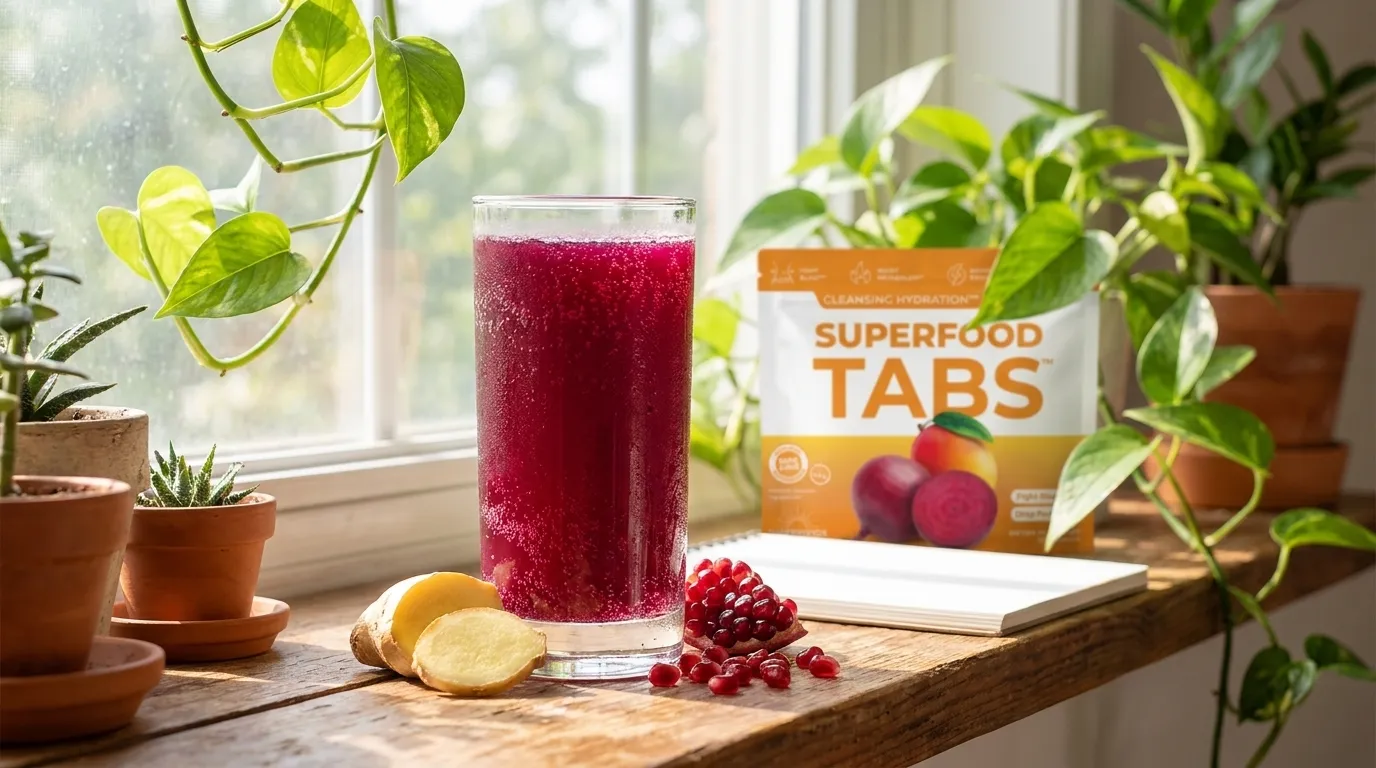
The question I get most often, usually in the DMs, is some version of: "Does the fizz actually do anything, or is it just for show?" Fair question. I asked it myself the first time I dropped a tablet into a glass and watched it climb up the sides in a rush of pink foam. So let me answer it the way I'd answer a friend who'd already spent the money — honestly, with the science, and without pretending a drink is a miracle.
"Gut health fizzy tablets" is a search term, not a regulated category, which means the phrase covers everything from glorified antacids to genuinely thoughtful formulas. The gap between those two is enormous. Here's how to tell them apart, and where our Superfood Tabs actually sit on that spectrum.
First, what the fizz is — and isn't
The bubbles come from a classic acid–base reaction: a food acid (usually citric acid) meets a carbonate or bicarbonate, and the moment they hit water they release carbon dioxide. That's the hiss. It's the same chemistry as a school-science volcano, just tastier.
The fizz itself isn't the "gut" ingredient. What it does is deliver. Because the tablet is already dissolved by the time it reaches you, your stomach doesn't have to break down a hard, compressed pill first. Effervescent formats have a real, measurable advantage here: effervescent tablets are dissolved in water and, when ingested, are absorbed more quickly into the stomach than regular tablets or capsules. Studies on effervescent paracetamol are the classic example — research on effervescent paracetamol found that the dissolved form was absorbed noticeably faster than conventional tablets.
I want to be precise, because the internet exaggerates this. Because effervescent nutrients are pre-dissolved, they can begin working sooner than traditional tablets. "Sooner" and "more available" — yes. Some marketing quotes very dramatic absorption figures for solid pills versus liquids; treat those numbers as ingredient- and study-specific, not a universal law. The honest takeaway: dissolving first removes a step, and for someone with sensitive digestion that gentler entry genuinely matters.
The part most articles skip: polyphenols are prebiotic-ish
Here's where a real gut formula earns the name. When people hear "gut health," they think fiber and probiotics. Both matter. Fermentable fibers such as inulin, fructooligosaccharide (FOS) and galactooligosaccharide (GOS) are considered typical prebiotics. But that's not the whole story anymore.
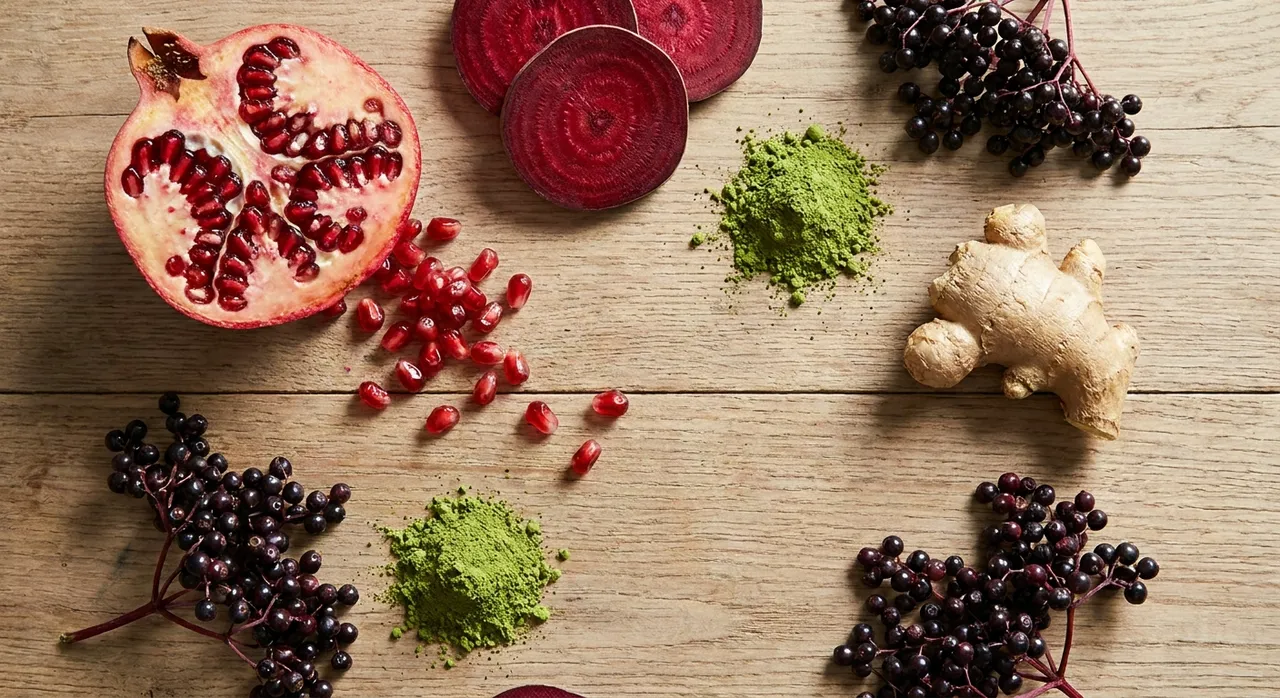
The newer, more interesting research is on polyphenols — the deeply colored plant compounds in beets, pomegranate, green tea, and berries. Increasing evidence strongly suggests that besides these dietary fibers, other food bioactive compounds like polyphenols are also shaping the microbiome. In fact, polyphenols, a diverse group of bioactive compounds, selectively modulate microbial populations. Fiber and polyphenols also work as a team — dietary fiber serves as a fermentable substrate for beneficial gut bacteria, promoting the production of short-chain fatty acids (SCFAs), while polyphenols contribute alongside them. Those short-chain fatty acids are a big deal; they're the fuel your colon cells actually prefer.
This is the whole reason our formula is built on plants, not a single "hero" fiber. Look at the polyphenol lineup: Beet Root, Pomegranate, Green Tea, Matcha, Elderberry, Goji Berry. That's not a coincidental produce aisle — it's a spread of compounds your gut bacteria interact with in different ways.
Where our specific ingredients come in
I read the studies behind each one so I can say this with a straight face. A few that matter most for the digestion-and-metabolism conversation:
- Pomegranate. It's rich in ellagitannins and punicalagins that your gut bacteria convert into compounds called urolithins — which is exactly why a healthy microbiome makes pomegranate more useful to you. Clinical reviews (including Pomegranate and Metabolic Syndrome Risk Factors: A Systematic Review of Clinical Studies) report reductions in body weight and waist measures alongside improved metabolic markers. Pomegranate also carries one of the highest antioxidant capacities of any fruit.
- Ginger Root. The one I'd never leave out of a gut drink. Gingerols and shogaols act as 5-HT3 receptor antagonists and help move the stomach along, which is why clinical trials consistently show ginger relieves nausea (the 109 Randomized Controlled Trials systematic review is the big reference here). A separate GRADE-assessed meta-analysis of 27 trials also linked ginger to reductions in body weight, BMI, and waist circumference.
- Green Tea & Matcha. EGCG is the most abundant green tea catechin, and a dose-response meta-analysis of RCTs found green tea extract lowered body mass, BMI, and body-fat percentage while raising adiponectin. It's also where the caffeine lives — 100mg per serving, from green tea leaf extract, which is roughly a cup of coffee's worth for that clean, non-jittery lift.
- Aloe Vera. Soothing, and more than folklore — in an 8-week randomized trial in obese adults with impaired glucose control, aloe vera produced significantly greater body weight and body-fat loss than placebo by improving insulin sensitivity.
- Lemon Balm. The gut–brain link is real, and stress hits your middle. Rosmarinic acid raises calming GABA tone; a randomized placebo-controlled trial found lemon balm reduced anxiety by roughly 49% in surgical patients. Less stress can mean fewer "I'll just grab a snack" moments.
Alongside those sit Milk Thistle, Burdock Root, Dandelion, Chlorella, Wheat Grass, and Ginseng — traditional bitters and greens that round out the profile. Ginseng deserves a nod on energy: a randomized double-blind placebo-controlled trial found Panax ginseng significantly reduced mental and physical fatigue in people with chronic fatigue.
How to read a "gut health fizzy tablet" label like a dietitian
If you're standing in the comparison-shopping phase, here's my actual checklist:
- Are there named plants, or just "proprietary blend, 500mg"? You want to see the ingredients. Vagueness usually hides underdosing.
- Is there color diversity? Reds, greens, purples signal a range of polyphenols rather than one repeated compound.
- Does it tell you the caffeine amount? Ours states it plainly: 100mg. A gut drink you take daily shouldn't surprise you at 4pm.
- Does the taste make it sustainable? This isn't fluff. The best supplement is the one you actually take. As one customer put it:
"I love these. I had to stop my subscription for a period of time but realized I enjoyed them so much, it became a non negotiable."
- Are the claims honest? No single tablet "detoxes" you — your liver and kidneys do that. What a good formula does is make hydration and steady nutrition easy.
On that last point: the reviews that mean the most to me are the boring, consistent ones. People describe less bloating, gentler regularity, fewer cravings — "no more sugar craving or want to eat snacks" — and, over months, a looser waistband. "I can tell by the fit of my clothes." Those are believable outcomes of a daily, plant-forward, well-hydrated habit. The very large weight-loss numbers some folks share are their whole lifestyle at work, not a tablet in isolation, and I'd be doing you a disservice to imply otherwise.
My honest bottom line
The fizz is not magic. It's a delivery format that dissolves fast and goes down easy — which, if it gets you to actually drink your greens every morning, is doing more real-world good than a bottle of pills you forget in the cabinet. The gut benefit comes from what's dissolved in the water: a spread of polyphenols and bitters that your microbiome can put to work, plus ginger to settle things and enough water to keep everything moving.
If you already own a pouch, drink it in the morning with a full 8–12 oz of cold water, before your coffee if you can. If you're still deciding, that's exactly what Superfood Tabs is built to be: the easy, genuinely tasty version of "eat your vegetables."
These statements have not been evaluated by the Food and Drug Administration. This product is not intended to diagnose, treat, cure, or prevent any disease. The research described here refers to individual ingredients studied on their own, not to the finished product, and individual results will vary. If you are pregnant, nursing, take medication, or have a medical condition, talk with your healthcare provider before adding any new supplement — including caffeine — to your routine.
Priya is a registered dietitian who reviews the science behind every ingredient we use. She spends her days turning clinical research into plain English.
Ready to try it for yourself?
Shop Superfoods Company