Do Gut-Health Fizzy Tablets Actually Feed Your Gut? The Science I Trust

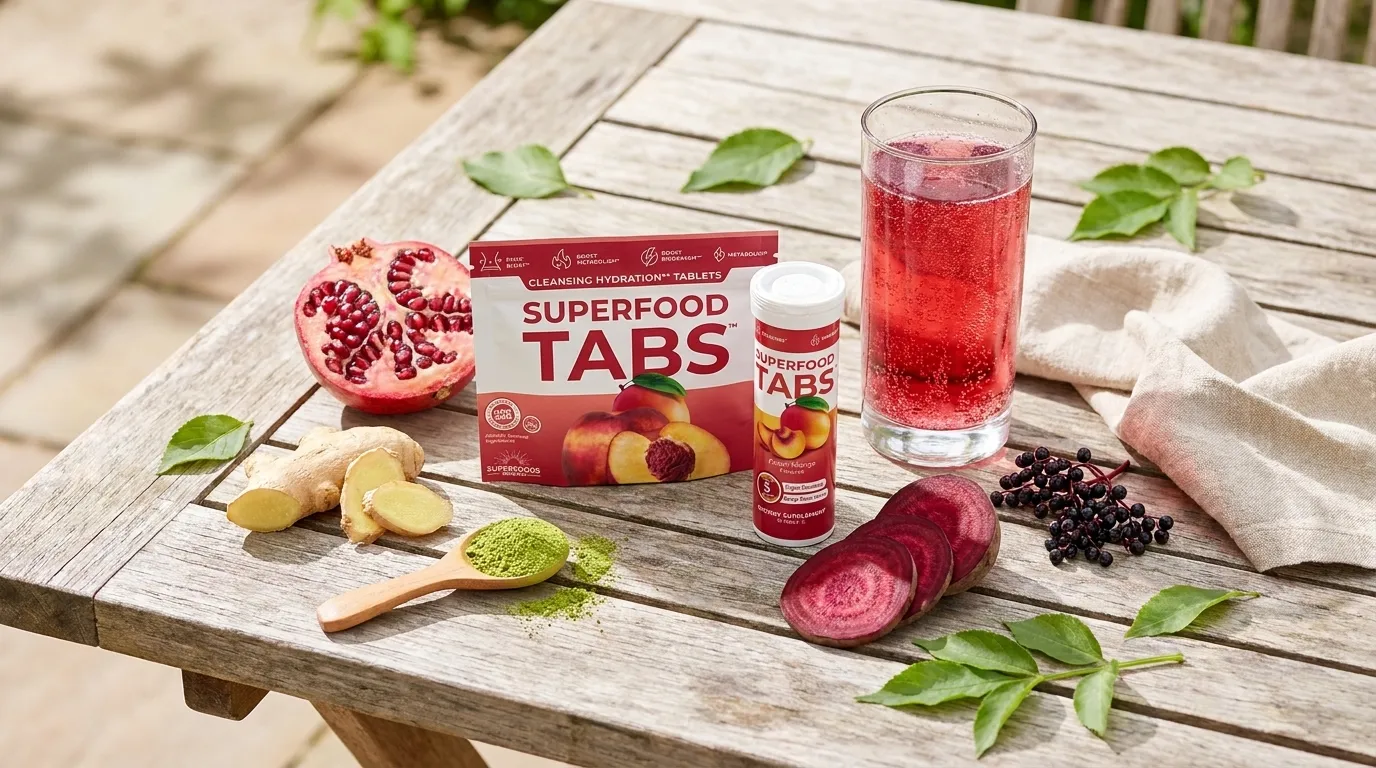
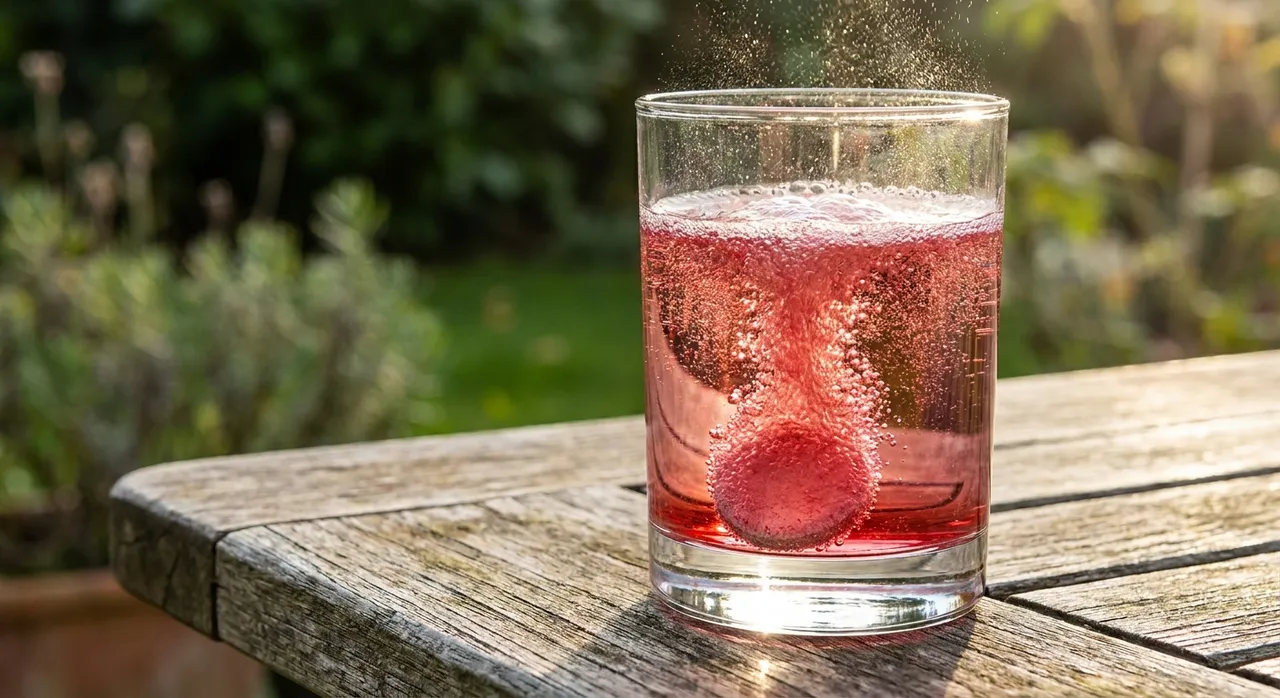
The first time I dropped a tablet into a glass and watched it climb into that ruby-colored fizz, I did the thing I tell everyone not to do: I judged it by the theater. It looked like a bath bomb. And I am, professionally, a skeptic — I read the studies behind every ingredient we use, and my default setting is "prove it." So I want to answer the question I get in my inbox almost weekly, usually phrased some version of this: do gut-health fizzy tablets actually do anything for my gut, or am I just drinking flavored bubbles?
Short answer: the fizz is the delivery truck, not the cargo. What matters is what's dissolved in the water. Let me walk you through what the science supports, what it doesn't, and where I land after looking at the evidence for the ingredients in our Superfood Tabs.
First, what the fizz is actually doing
The bubbles aren't magic and they aren't marketing. An effervescent tablet is a bit of tidy chemistry. The base of these tablets typically pairs an acid (citric acid) with sodium or potassium bicarbonate, and when water hits them they react — that reaction is the fizz, and it dissolves the tablet into a solution while helping keep the pH stable for the active ingredients. The practical upside is boring but real: instead of swallowing a horse pill, you get the actives already broken down and evenly dispersed in liquid, which is easier on people who struggle with tablets and gets everything into a drinkable form fast.
Here's my honest caveat, because I'd rather you trust me than love me: "dissolves faster" is not the same as "does more inside your gut." The fizz gets the ingredients into your glass. Whether they help your gut depends entirely on which ingredients they are and what the research on those ingredients shows. So that's where I spend my attention.
The gut-relevant part: polyphenols and your microbiome
When people say "gut health," they usually mean two different things smushed together: how digestion feels (bloating, regularity, that heavy middle) and what's happening with the trillions of bacteria in your colon. The fizzy-tablet ingredients I find most interesting map onto the second one.
A lot of our tablet is, chemically speaking, a polyphenol delivery system — pomegranate, green tea, matcha, beet root, elderberry, goji berry. These plant compounds don't all get absorbed high up in your small intestine. A meaningful fraction travels down to the colon, where your gut bacteria get to work on them. And that interaction appears to matter.
A 2025 systematic review and meta-analysis pooled the randomized controlled trials on this exact question. Across 50 randomized controlled trials, polyphenol supplementation was associated with beneficial shifts in gut microbiota composition and with increases in short-chain fatty acid production in adults. Short-chain fatty acids — especially butyrate — are basically the currency of a healthy gut lining; they're what your good bacteria make when they ferment the right compounds. The same review noted these associations tended to be stronger in people with metabolic issues and in interventions that ran twelve weeks or longer.
Now the part that separates a dietitian from an ad. The authors were explicit that these findings should be read as associations rather than proof of a mechanistic or "prebiotic" effect, and that more dose-controlled, long-term human studies are needed to know whether the microbiota changes translate into clinically meaningful outcomes. I love that they said so, and I'll say it too: polyphenols look genuinely promising for the gut microbiome, and they are not a settled miracle. Both things are true.
Pomegranate is my favorite example of why this gets interesting. Its ellagitannins and punicalagins aren't the active players by themselves — your gut bacteria convert them into compounds called urolithins, which is where a lot of the downstream benefit is thought to come from. In other words, the ingredient and the microbiome are collaborators. That's a very gut-centric way for a "gut tablet" to work.
Ginger: the ingredient that works on how digestion feels
If polyphenols are the slow, behind-the-scenes microbiome story, ginger is the one you might actually notice. This is the ingredient I point to when someone tells me they want less bloat and a lighter middle rather than a lab report.
The clinical data here is unusually clean. In a controlled study, ginger sped up gastric emptying and stimulated antral contractions in healthy volunteers — the gastric half-emptying time was roughly 13 minutes after ginger versus about 27 minutes after placebo. Faster, more coordinated stomach movement is exactly the mechanism you'd want against that post-meal heaviness.
Zoom out to the broader literature and it holds. A systematic review of ginger in gastrointestinal disorders describes it as a carminative that reduces pressure on the lower esophageal sphincter, eases intestinal cramping, and helps prevent dyspepsia, flatulence, and bloating. That same review concluded ginger is a useful supplement for GI symptoms including nausea, vomiting, and bloating, and can be used at 1000 mg/day without side effects. On the mechanism side, our own ingredient research shows gingerols and shogaols act as 5-HT3 receptor antagonists — the same target several anti-nausea drugs hit — which is why the "Ginger on Human Health" review of 109 randomized trials found it reliably relieves nausea.
The honest framing I use with clients: polyphenols are the long game for your microbiome; ginger is the ingredient most likely to change how your stomach feels this week.
Don't skip the obvious one: it makes you drink water
This sounds too simple to count, but hydration is a real, unglamorous pillar of gut function — water keeps things moving and supports gentle regularity. A fizzy tablet's underrated superpower is behavioral. It turns "I should drink more water" into something you actually want to do because it tastes good. Several of our reviewers describe this better than I can, and it lines up with what I see: the tablet that makes hydration a daily habit is the one that helps, precisely because you keep using it.
What to look for on a label (my quick checklist)
- Real polyphenol sources, not just "proprietary blend." Pomegranate, green tea, matcha, and beet root are the ones with human data behind them.
- Ginger for the digestive-comfort angle. If bloating is your concern, this is the ingredient doing the heavy lifting.
- An effervescent base you recognize (citric acid + bicarbonate) — that's standard, well-understood chemistry, not a red flag.
- A realistic caffeine number. Ours carries 100mg from green tea leaf extract, which is why many people get clean, steady energy without the jittery crash. Good to know if you're caffeine-sensitive or drinking it late.
- Patience. The microbiome research skews toward 12-week timelines. Give it more than three days before you decide.
How I actually drink mine
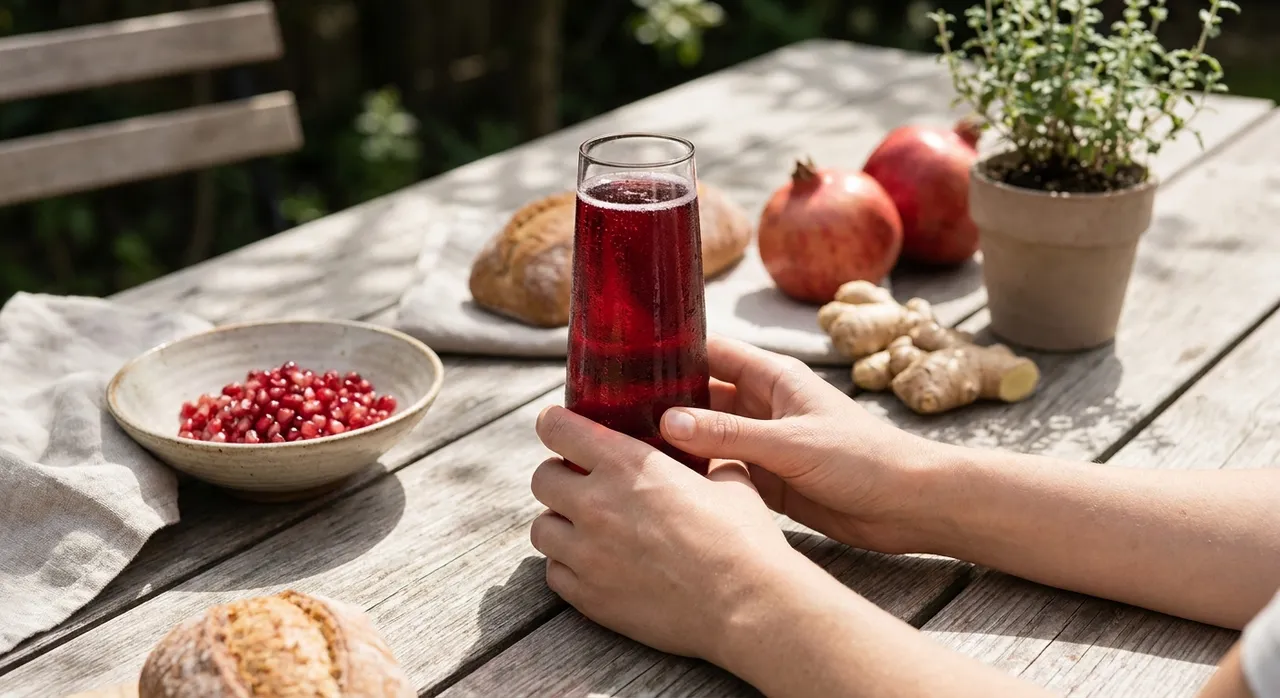
I keep it simple. 12 to 16 ounces of cold water, one tablet, and I let it fully finish fizzing before I drink — a flat, fully-dissolved solution is gentler on the stomach than gulping it mid-reaction. I have mine mid-morning rather than on a completely empty stomach, mostly because of the caffeine and because ginger plus a little food feels best to me. If you're using it for digestive comfort, drinking it before or alongside a meal makes sense given ginger's effect on gastric emptying.
And because I promised value, not just theory — this is what keeps people coming back. One reviewer put it in a way I think about often: "I had to stop my subscription for a period of time but realized I enjoyed them so much, it became a non negotiable." Another shared, "no more sugar craving or want to eat snacks." Those are the everyday, feel-it-in-your-clothes changes that make a habit stick, and a habit is the only thing that lets the slower microbiome science have time to matter.
So — do they work?
Here's where I land. The fizz itself is a delivery format, full stop. But the ingredients dissolved in that fizz are not nothing: polyphenols are associated with favorable microbiome shifts and more short-chain fatty acids (with real caveats about proving causation), and ginger has genuinely solid human data for moving digestion along and easing bloat. A gut-health fizzy tablet earns its name when it's built on ingredients like those and when you actually drink it consistently. If a tablet gets you hydrated daily and delivers researched plant compounds you'd otherwise skip, that's a reasonable, evidence-informed win — not a cure, but not just bubbles either.
These statements have not been evaluated by the Food and Drug Administration. This product is not intended to diagnose, treat, cure, or prevent any disease. The research described here refers to individual ingredients studied on their own, not to the finished Superfood Tabs product, and individual results vary. If you are pregnant, nursing, taking medication, or managing a medical condition, talk with your healthcare provider before starting any new supplement.
Priya is a registered dietitian who reviews the science behind every ingredient we use. She spends her days turning clinical research into plain English.
Ready to try it for yourself?
Shop Superfoods Company