Do Gut-Health Fizzy Tablets Actually Reach Your Gut? Here's the Science

I have a small confession for someone whose job is reading clinical trials: for years I was the person who bought the gut supplement, took it for four days, then found the bottle six months later behind the almond butter. Untouched. The problem was never the ingredients. It was that a capsule felt like a chore, and chores get skipped.
So when people ask me whether gut-health fizzy tablets are "just a gimmick," I get why they're skeptical. Fizz feels like marketing. But there's a genuinely interesting bit of science hiding in that glass of dissolving color — and also some honest limits worth knowing before you spend money. Let me walk you through both.
First: what "gut health" actually means
Your gut isn't one thing. It's the muscular plumbing that moves food along, the lining that absorbs nutrients, and the roughly trillions of microbes living in your colon that ferment what you can't digest. When people say they want "better gut health," they usually mean some mix of three outcomes: more comfortable digestion, less bloating, and regularity that doesn't require thinking about it.
A fizzy tablet touches all three — but through different mechanisms than most people assume. It's not one magic compound. It's the delivery system doing a few unglamorous things well.
The most underrated ingredient is the water
Here's the part nobody puts on the label because it isn't sexy: the tablet forces you to drink 8 to 16 ounces of water. And water is foundational to how your gut works. Adequate fluid intake supports digestion, nutrient absorption, and regular bowel movements — all of which contribute to a well-functioning gut.
This matters most if you eat fiber, which you should. People eating high-fiber diets should increase their water intake to help fiber move smoothly through their digestive system. Fiber without water is like a sponge with nothing to absorb — it can actually make things worse. The general targets are worth knowing, too: the National Academy of Medicine suggests that men should have about 13 cups of water daily and women should have about 9 cups, where 1 cup equals 236mL.
My honest take: if a fizzy tab is the reason you drink two extra glasses of water a day, you'd get a digestive benefit even if the tablet were flavored plain. The "gut health" starts there. One reviewer put it in a way I find very human —
"I love these. I had to stop my subscription for a period of time but realized I enjoyed them so much, it became a non negotiable."That "non negotiable" is the whole game. Adherence beats intensity.
Why the fizz itself may help absorption
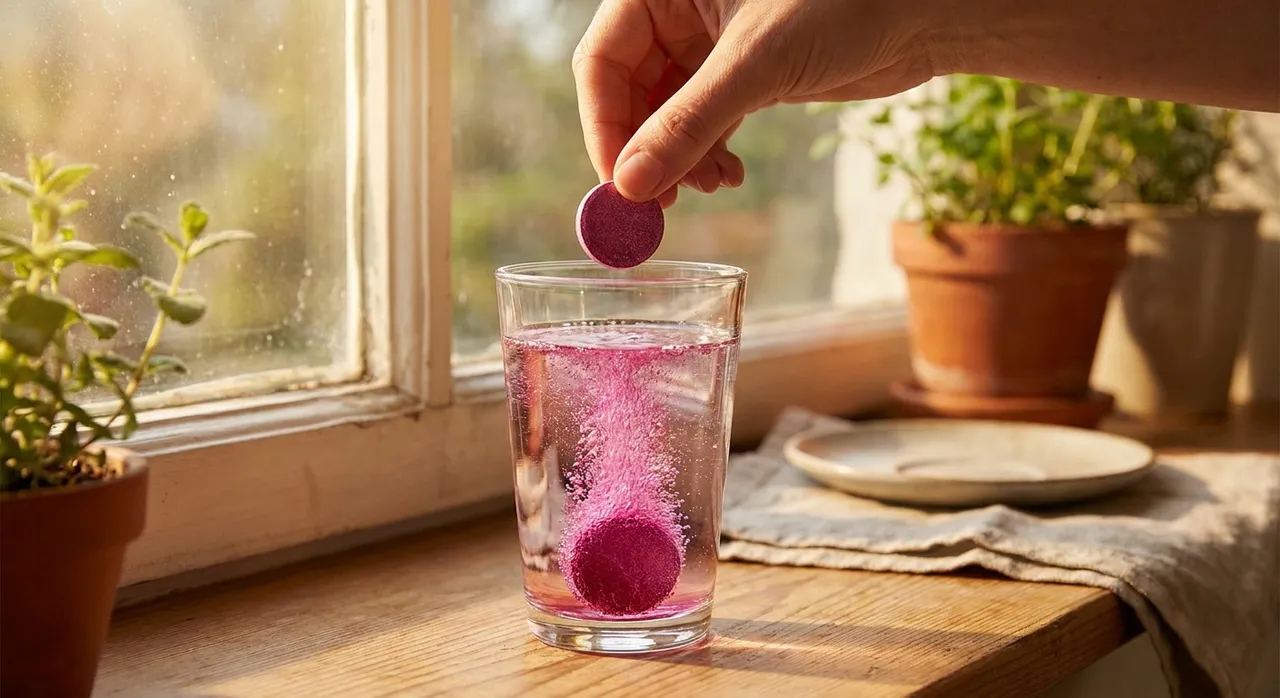
Effervescence isn't only about the sensory fun (though the fizz is genuinely nice). Dissolving a tablet delivers the actives already in solution, so your stomach doesn't have to break down a compressed pill first. Gut health determines how well you absorb nutrients, and effervescent tablets work with your digestive system rather than against it. This approach offers significant advantages for anyone with sensitive digestion or absorption issues.
The other quiet advantage: when ingredients are fully dissolved, they can start working right away. Some formulations include prebiotic fibers that dissolve completely, providing food for beneficial gut bacteria, and digestive enzyme supplements in effervescent form begin working immediately upon consumption. I'd temper the hype here — "immediately" is a marketing word — but the mechanism is real. A solution has nothing to disintegrate.
The ingredients that talk to your gut microbes
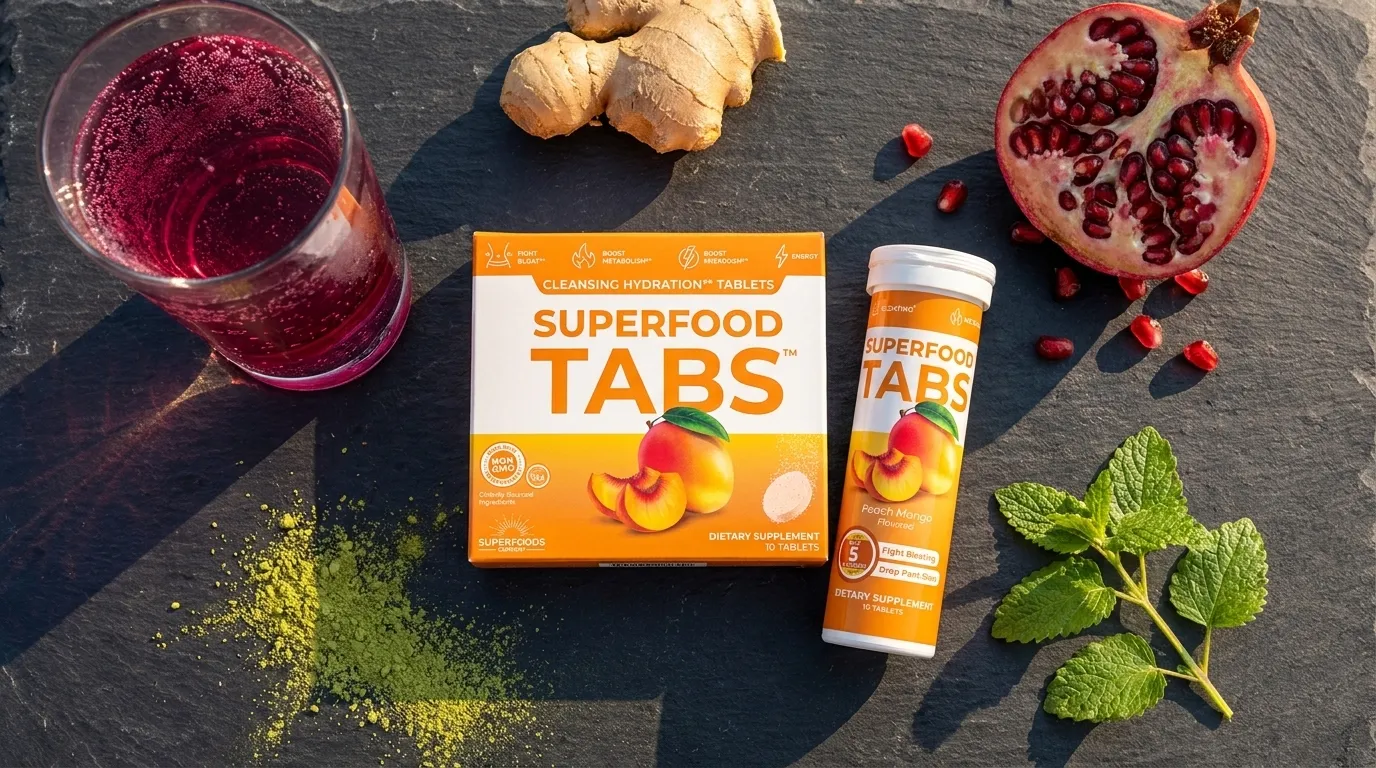
This is where Superfood Tabs gets interesting to me as a dietitian, because the formula leans on polyphenol-rich plants — Pomegranate, Green Tea, Matcha, Beet Root, Goji Berry, Elderberry — and polyphenols are increasingly understood as microbiome food, not just antioxidants.
Take pomegranate. It's loaded with ellagitannins and punicalagins, and your gut bacteria are what convert those compounds into urolithins — the actually-active metabolites. In other words, the plant hands raw material to your microbes and lets them finish the job. Clinical reviews on pomegranate report reductions in body weight and waist measures alongside improved metabolic markers, which is why I don't treat it as a "detox" ingredient but a metabolic one.
A few others earning their place in the tube:
- Ginger Root. This is the digestion workhorse. Gingerols and shogaols act as 5-HT3 receptor antagonists and accelerate gastric emptying, and clinical trials consistently show ginger relieves nausea, including pregnancy-related nausea. That's the "settles my stomach" feeling people describe.
- Green Tea & Matcha. EGCG is the most abundant green tea catechin and a potent free-radical scavenger. Separately, a dose-response meta-analysis of RCTs found green tea extract lowered body mass, BMI, and body-fat percentage — one reason "less bloating, a lighter middle" shows up so often in our reviews.
- Aloe Vera. In an 8-week randomized trial in obese adults with impaired glucose control, aloe vera produced significantly greater body weight and body-fat loss than placebo, likely via improved insulin sensitivity.
- Lemon Balm. Not a gut ingredient on paper — but its rosmarinic acid raises calming GABA tone, and a randomized placebo-controlled trial found 1.5 g/day reduced anxiety by about 49% in surgical patients. Since stress drives stress-eating and gut discomfort, calm is quietly a digestive tool.
There's also Burdock Root, Dandelion, Chlorella, Wheat Grass, and Milk Thistle rounding out the plant matrix, plus 100mg of caffeine from green tea leaf extract — enough for clean, steady energy without the crash a strong coffee gives me at 7am.
What the fizz won't do — my caveats
I'd be a bad dietitian if I let you think a tablet reseeds your microbiome. It doesn't. If you want more diverse gut bacteria, the single best lever is still eating a wide range of plants and fiber every week — a fizzy tab is a helpful supporting act, not the lead. And while hydration alone is not a cure-all, it plays a foundational role in maintaining digestive health and supporting the body's natural processes.
The weight-loss stories in our reviews are striking — one customer wrote
"I love superfood tabs! They have helped me lose over 60 pounds and I have kept it off for over 2 years."and another,
"no more sugar craving or want to eat snacks."I love reading these. But I want you to read them the way I do: as people who replaced a sugary drink with a low-calorie one, drank more water, and did it consistently for months. The tablet made a better habit easy. That's not a small thing — it's arguably the whole thing — but it's a habit, not a miracle.
How I actually use it for my gut
- Fill a 12–16 oz glass with cold water (cold water dissolves the fizz a touch slower, which I prefer — more visible bubbles).
- Drop in one tablet and let it fully dissolve, about 60–90 seconds. Don't rush it; undissolved bits are just grit.
- Drink it before your morning coffee, on a relatively empty stomach, so the ginger and polyphenols land first.
- Follow with a second plain glass of water within the hour. This is the step people skip, and it's the one that does the most for regularity.
That's it. No ritual, no timing hacks. The point is a routine you'll still be doing in March, not just January.
These statements have not been evaluated by the Food and Drug Administration. This product is not intended to diagnose, treat, cure, or prevent any disease. The studies referenced here describe individual ingredients and their properties in isolation, not the finished Superfood Tabs product, and individual results vary. If you are pregnant, nursing, taking medication, or managing a medical condition, talk with your healthcare provider before starting any new supplement.
Priya is a registered dietitian who reviews the science behind every ingredient we use. She spends her days turning clinical research into plain English.
Ready to try it for yourself?
Shop Superfoods Company