From the Fizz to Your Flora: How a Gut-Health Tablet Feeds the Good Bacteria

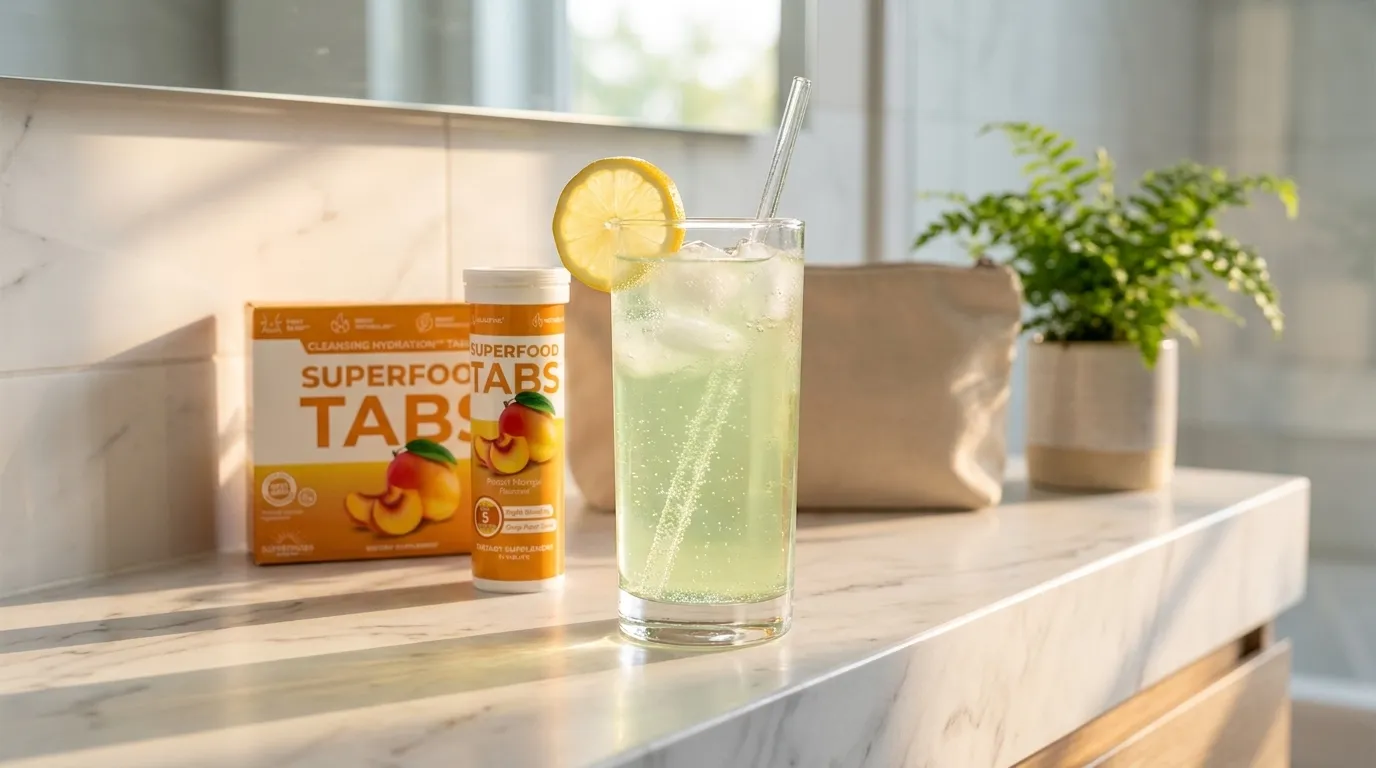
The first time a customer asked me "but does the fizzy part actually do anything for my gut, or is it just for show?" I was standing in my kitchen at 6:40 a.m. with a glass hissing in my hand. Fair question. I stared at the bubbles for a second longer than I needed to. Then I gave her the honest answer, which is the same one I'll give you here: the fizz is mostly the delivery truck, not the cargo. The interesting part is what's riding inside it — and where that cargo ends up.
So let me walk you through it the way I wish someone had walked me through it years ago. Glass, to stomach, to the part of your gut where the real work happens. No hand-waving.
Step one: what the fizz is actually doing
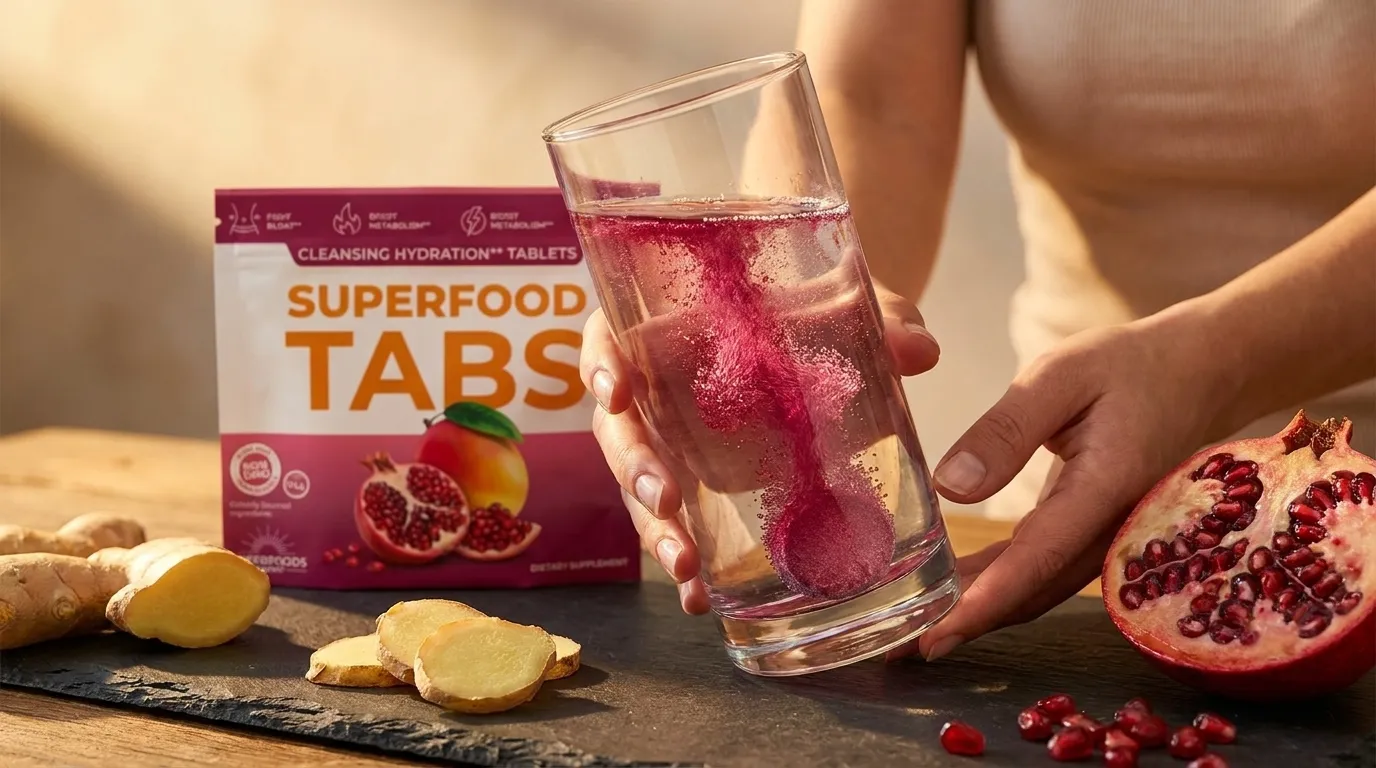
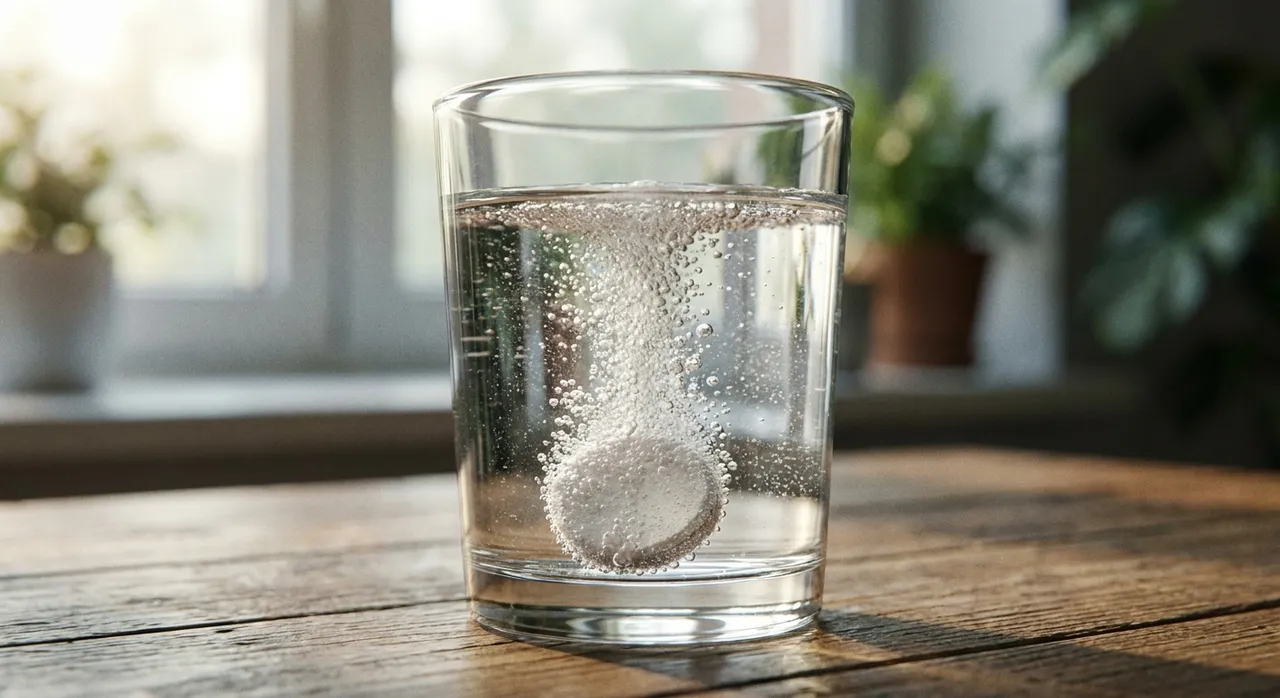
Drop a tablet in water and you get that satisfying hiss. That's a straightforward chemistry reaction. When placed in water,
Superfood Tabs land in the glass as a solid and reach your stomach already dissolved. That head start matters more than the theatrics.
Here's the mechanism in plain English. Effervescent tablets pair an acid (usually citric acid) with a carbonate. Effervescent tablets are designed to dissolve in water and release carbon dioxide, and that CO₂ is what makes the bubbles. By the time you drink it, the tablet isn't a tablet anymore — it's a solution. Nothing has to break down in your stomach the way a hard pill does.
Why do I care about that for gut health specifically? Two reasons. First, a pre-dissolved dose is gentler on a sensitive stomach — there's no chalky lump sitting there. Second, the science on the format is genuinely interesting: because of the carbonate, the gastric pH is temporarily elevated, resulting in fast gastric emptying, which in turn promotes drug absorption from the upper small intestine. Translation: the good stuff clears your stomach quickly and moves on to where absorption starts.
But — and this is the part people miss — not everything gets absorbed up top. A lot of what makes a gut-health tablet a gut tablet is designed to travel further down.
Step two: the split — some in, some through
Once that solution hits your small intestine, the ingredients basically go two directions.
Direction one: absorbed and put to work. The polyphenol-rich pieces — matcha and green tea catechins, pomegranate, ginger, ginseng — get partly absorbed and act throughout the body. The research here is real and specific. Polyphenols increased the production of short-chain fatty acids, including butyrate, and clinical trials showed an increased abundance of Lactobacillus, Bifidobacterium and Faecalibacterium — those are the friendly bacteria you want. In our blend, green tea's EGCG carries a lot of that antioxidant load, and studies on catechins and human health describe how EGCG regulates cell-signaling pathways tied to metabolic and cardiovascular health while neutralizing free radicals.
Direction two: passing through to feed your flora. This is my favorite part and the one that earns the phrase "gut health." Plant polyphenols don't just get absorbed — after ingestion, they interact with the gut microbiota and are modulated by bacterial fermentation into metabolites such as short-chain fatty acids. In other words, some of these compounds behave like food for your bacteria. When your microbes ferment them, they pump out short-chain fatty acids that help maintain the gut barrier and calm inflammation.
Where burdock and dandelion come in
Two of our quieter ingredients do heavy lifting here. Burdock root and dandelion are both natural sources of inulin — a prebiotic fiber. In humans, inulin travels to the lower gut, where it functions as a prebiotic — a food source for beneficial gut bacteria. It isn't absorbed up top; it's meant to go the distance. That's the whole point of a prebiotic: it's not for you, exactly. It's for the trillions of tenants downstream who pay their rent in short-chain fatty acids.
Add ginger to the picture and you cover the "settle my stomach" side of digestion too. Gingerols and shogaols act as 5-HT3 receptor antagonists and accelerate gastric emptying, and a comprehensive systematic review of 109 randomized controlled trials found ginger consistently relieves nausea. It's also anti-inflammatory — meta-analyses report significant reductions in C-reactive protein and TNF-α. So one glass is quietly working on both ends: feeding your flora and keeping the pipes moving.
Step three: why "less bloating" is the review I trust most
I read our reviews the way other people read the news. And the digestive comments are the ones I find most believable, because they describe the mechanism I just laid out without knowing they're doing it. People tell us they notice "less bloating, a lighter middle," gentler regularity, and — my favorite phrasing — "my clothes are a little looser in the waist." That's not a dramatic before-and-after photo. That's someone noticing their gut is calmer over a few weeks. That tracks with fiber-plus-polyphenols doing slow, unglamorous work.
One customer put the habit part perfectly: "I love these. I had to stop my subscription for a period of time but realized I enjoyed them so much, it became a non negotiable." Another mentioned the cravings side — "no more sugar craving or want to eat snacks." There's plausible biology behind that too: lemon balm's rosmarinic acid modulates GABA activity to dampen the stress response, and since elevated cortisol drives cravings for calorie-dense comfort foods, calming the stress loop can indirectly help. I always tell people not to expect miracles from a single sip — but a lighter middle and fewer 3 p.m. raids on the pantry? Those are reasonable, and they're exactly what the ingredients would predict.
What to actually look for on a gut-health label
If you're comparing fizzy tablets — ours or anyone's — here's the checklist I use as a dietitian:
- A real prebiotic source, not just "digestive blend." Look for inulin-containing botanicals like burdock or dandelion. That's the ingredient meant to reach your lower gut and feed bacteria.
- A spread of polyphenols. Green tea, pomegranate, and ginger each hit a different pathway. Variety matters because different microbes prefer different substrates.
- Honesty about caffeine. Ours has 100mg from green tea leaf extract — roughly a cup of coffee's worth. Great for clean, steady energy; worth knowing if you're sipping it at 8 p.m.
- Taste you'll repeat. The best gut routine is the boring one you actually keep. If it tastes like a chore, your microbiome never gets the consistency it needs.
My honest take after all of it: the fizz isn't the medicine, and any brand that leans hard on the bubbles is selling you theater. The value is in what dissolves into that glass — a spread of polyphenols that partly absorb and partly feed your bacteria, plus inulin from burdock and dandelion built to travel all the way down. Drink it cool, drink it daily, and give your flora a few weeks. That's how it works.
How I drink mine
- 1 tablet in 10–12 oz of cold water — cold keeps the fizz lively and the taste crisp.
- Let it fully dissolve (about 60–90 seconds) before the first sip, so you're getting the solution, not chasing undissolved bits.
- I take mine before my first coffee, on a mostly empty stomach, so the ginger has room to settle things first.
These statements have not been evaluated by the Food and Drug Administration. This product is not intended to diagnose, treat, cure, or prevent any disease. The research described above examines individual ingredients — not the finished product — and individual results vary. If you're pregnant, nursing, taking medication, or managing a health condition, talk with your healthcare provider before starting any new supplement.
Priya is a registered dietitian who reviews the science behind every ingredient we use. She spends her days turning clinical research into plain English.
Ready to try it for yourself?
Shop Superfoods Company