Coffee That Wakes You Up Without the 10 a.m. Shakes


I found out the hard way that I'm a two-cups-before-noon person with a very specific problem: cup number two, if I drink it too fast on an empty stomach, turns my handwriting into a seismograph reading. For about fifteen years I just assumed that was the price of being awake. It isn't. And figuring out why has changed the way I brew every single morning — including the coffee I develop here.
So this is the actual method I use. Not a theory. The cup I make in my own kitchen before the house wakes up, and why each step matters if what you want is energy that stays flat and steady instead of spiking and dropping you.
First, why coffee gives you the shakes at all
The jitters aren't random. They're chemistry. Caffeine blocks adenosine receptors in the brain, which normally help calm the nervous system. With those receptors blocked, your body steps on the gas — releasing adrenaline and cortisol. That adrenaline is the racing heart and the buzzing hands. It's not the "energy" you actually wanted — it's a stress response riding along with it.
It gets worse on an empty stomach and worse when you drink fast. Coffee on an empty stomach tends to hit harder, leading to more intense jitters. The caffeine floods in with nothing to slow it down, you get a sharp peak, and then a sharp drop — the crash.
Here's the part most people never hear, though: caffeine on its own is only half the story of a good cup.
The ingredient that smooths the edge
There's an amino acid called L-theanine that shows up naturally in tea leaves — green tea especially — and it's the quiet hero here. Unlike the abrupt jolt coffee provides, the combination of L-Theanine and caffeine in green tea offers a gradual boost. L-Theanine's properties smooth out the sharp edges of caffeine, resulting in a more sustained and jitter-free alertness.
This is a real, studied pairing, not a wellness fairytale. Studies report that the caffeine and L-theanine in green tea have synergistic effects on cognition and mood, which allows for the same mental alertness one gets from the caffeine in coffee, but without the jitters. The way I've heard it described that stuck with me: caffeine boosts mental energy and motivation, while L-Theanine smooths the stimulation — resulting in "calm focus" or "clean energy."
This is exactly why Amazing Coffee isn't just ground beans. Alongside caffeine and green coffee, the blend leans on green tea and matcha — both of which bring that L-theanine along with the caffeine — plus cordyceps, chaga, shiitake, maca root, ginseng, turmeric, cinnamon, ginger and cocoa. You're not just drinking a stimulant. You're drinking a stimulant that arrives with its own brakes.
The single most common thing people tell us in reviews is some version of "Never a crash feeling like coffee." One reviewer put it plainly: "I'll never run out again!" I get it. Once you feel the difference, regular coffee starts to feel a little reckless.
My daily cup, step by step
The blend does a lot of the work, but how you drink it decides whether you feel smooth or shaky. Here's the routine.
What you need
- 1 rounded teaspoon Amazing Coffee (it's instant, so no grinder, no machine)
- 8–10 oz hot water, just off the boil — not a rolling boil
- A splash of milk or creamer if you like it (I do — about 1–2 tablespoons)
- Optional: a pinch of cinnamon on top
- Non-negotiable: a small bite of real food nearby
The steps
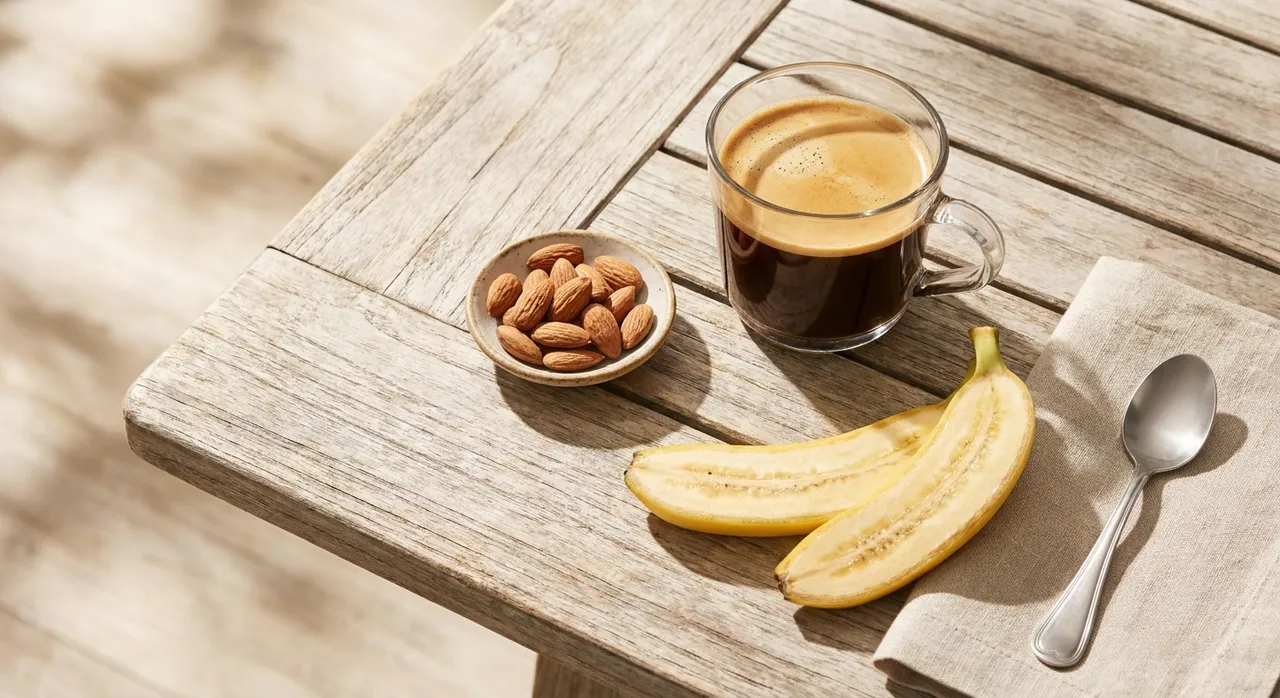
- Eat a little first, or drink it with food. This is the whole game. Certain foods can reduce coffee jitters by slowing down caffeine's absorption into the bloodstream. A balanced snack — preferably one rich in protein and fiber, like avocados, nuts, eggs, or oatmeal — helps slow caffeine absorption and stabilizes blood sugar, which can prevent the shakes. I keep a little dish of almonds and half a banana next to my mug. Every time.
- Let the water cool for about 30 seconds after the boil. Water that's screaming hot scorches the blend and makes it bitter. Just off the boil is right.
- Stir one rounded teaspoon into the hot water. Give it a real stir — 15 seconds — so the cocoa and matcha don't clump at the bottom.
- Add your milk or creamer. Beyond taste, the fat and protein slow things down further. Working with you, not against you.
- Now the step nobody wants to hear: sip it slowly. Don't slam it. One of my favorite customer notes says it best — "It really does curb your appetite. You need to allow it to work, after you drink your cup just relax and feel the fullness!!" Same principle applies to the energy. Give it ten unhurried minutes and you'll feel a lift come up under you instead of hitting you over the head.
If you drink more than one (I do)
I'm not going to pretend I stop at one. Plenty of our customers don't either — one wrote, "I am totally useless without it!!!!! I have 3 or 4 every morning!!" — and honestly, same energy over here. The trick for a second or third cup is spacing. Give it a couple of hours, and eat something with it again, especially if it's mid-afternoon and your stomach's empty. That's when a fast cup on nothing is most likely to catch up with you.
One more honest note: the smooth-energy effect is real, but it's still caffeine. If you're caffeine-sensitive, keep your later cups earlier in the day — the cordyceps, maca and ginseng in the blend are there for steady energy, but caffeine is caffeine, and your sleep will thank you for a cutoff.
Why this became my forever cup
I develop recipes for a living, which means I taste a lot of coffee I don't love. This one earned its place in my own kitchen because it does the thing I couldn't get from a regular pot: it wakes me up without the shakes, without the 11 a.m. floor-drop, and it tastes like something I actually want. A customer summed up my feelings better than I can: "My only regret is that I did not do this sooner."
Try the food-first, sip-slow method for three mornings. That's usually all it takes to feel the difference between being wired and being awake.
These statements have not been evaluated by the Food and Drug Administration. This product is not intended to diagnose, treat, cure, or prevent any disease. The research referenced here describes individual ingredients such as green tea, matcha, cordyceps, chaga, shiitake, turmeric, maca root and ginseng — not the finished product — and individual results will vary. If you are pregnant, nursing, taking medication, or have a medical condition, talk to your healthcare provider before adding a new caffeinated or supplement product to your routine.
Renee develops recipes at Superfoods Company and has been a two-cups-before-noon coffee drinker for twenty years. Every recipe here gets tested in her own kitchen first.
Ready to try it for yourself?
Shop Superfoods Company