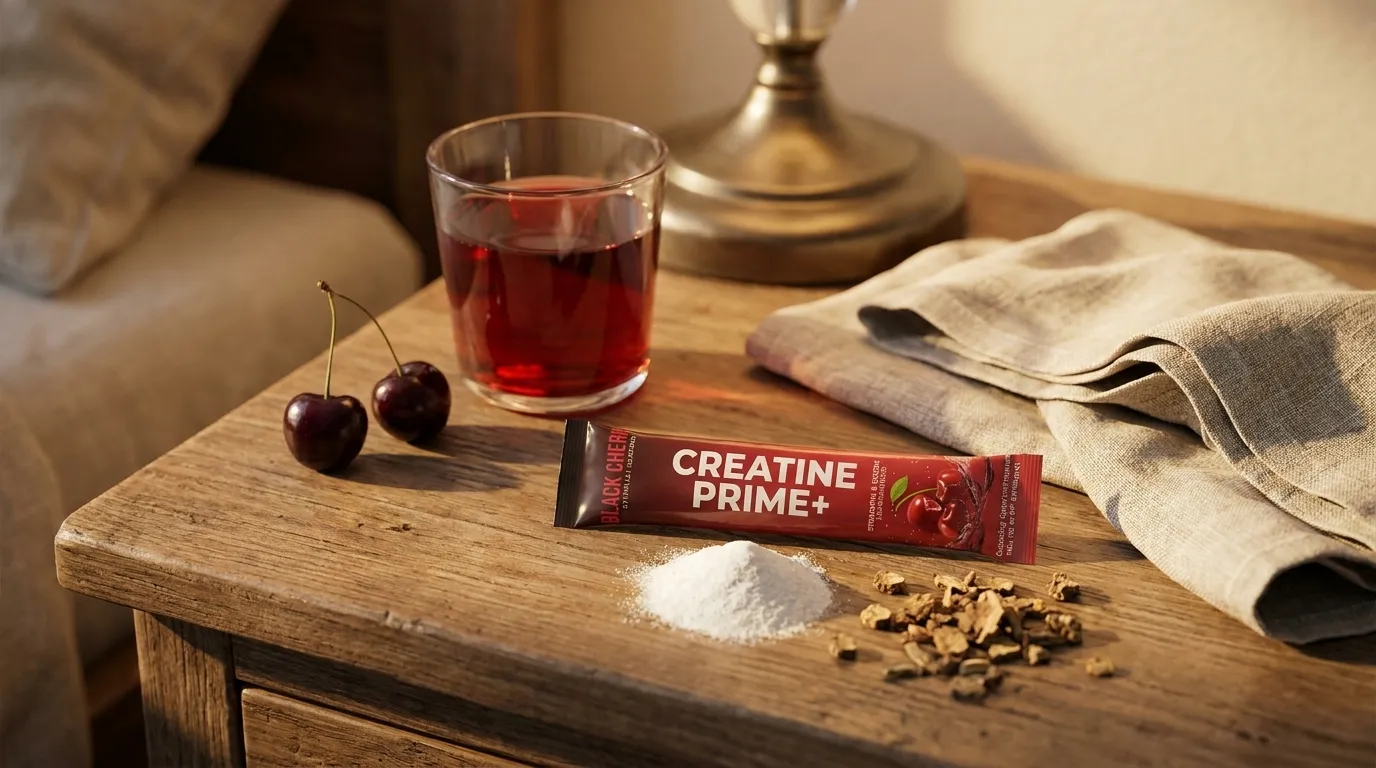
Why Creatine Prime+ Pairs a Muscle Classic With an Arctic Herb

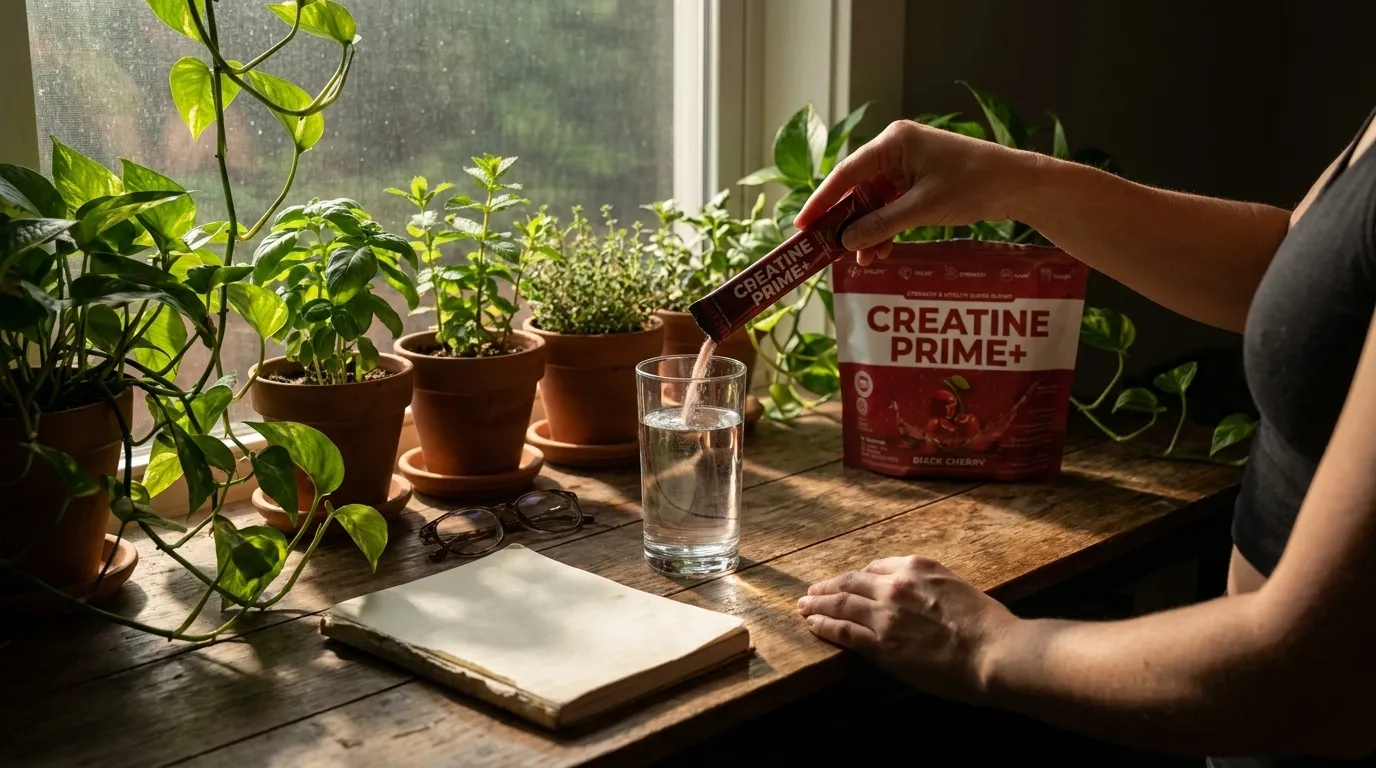
Around 3 p.m. on a Tuesday, I used to hit a wall. Not a dramatic one — just a slow fog where I'd reread the same email three times and reach for a second coffee I didn't really want. That specific slump is what got me curious, professionally, about the two ingredients we put in Creatine Prime+. Because they don't do the same job. They tag-team.
Here's the short version before I get into the weeds: creatine handles the energy plumbing inside your cells, and rhodiola works on how your nervous system copes with a demanding day. One is a decades-deep sports-nutrition staple. The other is an herb people have chewed on in cold, high-altitude places for a very long time. On paper it's an odd couple. In practice, the logic holds up.
Creatine: it's an energy battery, not a stimulant
Most people file creatine under "gym stuff." Fair — that's where the research started. But the mechanism is broader than biceps. Creatine is an organic compound that facilitates the recycling of energy-providing adenosine triphosphate (ATP) in muscle and brain tissue, and it is a safe, well-studied supplement for strength training. Your cells store it as phosphocreatine, a little on-hand reservoir of high-energy phosphate.
When demand spikes — a heavy set, or a hard mental task — that reservoir helps regenerate ATP fast. The energy demand of neurons can increase rapidly, and maintaining ATP concentration despite that increased demand may explain the potential effect of creatine on cognition. This isn't hand-waving, either. The crucial role of creatine in brain metabolism is supported by evidence from cerebral creatine deficiency syndromes, where conditions causing brain creatine deficiency result in profound intellectual disability that can be reversed by creatine supplementation.
The catch — and I'd rather be honest than breathless here — is that the brain guards its supply. Given the constant energy supply required by the brain, there has been a paradigm shift from creatine monohydrate for skeletal-muscle benefits to potentially improving brain bioenergetics, and accumulating research indicates it can increase brain creatine stores, which may help explain improvements in cognitive functioning particularly during times of metabolic stress such as sleep deprivation and mental fatigue. Notice that phrase: during times of metabolic stress.
That's the pattern across the literature. There is some evidence that creatine supplementation can augment measures of cognitive function, and these cognitive effects appear to be more robust when brain bioenergetics are challenged, such as during sleep deprivation. Translation for real life: creatine seems to matter most on the days you're most likely to feel gassed. The busy days. The under-slept ones.
The aging evidence points the same direction. A systematic review, Creatine and Cognition in Aging, found that five of six studies reported a positive relationship between creatine and cognition in older adults, particularly in the domains of memory and attention — while noting, appropriately, that the current limited evidence suggests creatine may be associated with cognitive benefits in generally healthy older adults, though high-quality clinical trials are warranted to further validate this. I like that hedge. It's the correct amount of confidence.
What about the "brain fog" conversation?
A lot of people — especially women in their 40s and beyond — describe a foggy, effortful feeling that shows up alongside hormonal shifts. The research here is young but interesting. Newer imaging work is notable because it clears the first hurdle skeptics raise: does the stuff even reach the brain? In one eight-week study, using advanced MR imaging, 85 percent of participants showed increases in brain creatine levels, on average by 11 percent. That study population had Alzheimer's disease, so I won't overstate it — but it's the first solid proof that oral creatine can move the needle on brain creatine in people, not just muscle.
Mechanistically it's consistent, too. In the brain, creatine may improve cognitive performance by increasing cellular energy reserves and reducing oxidative stress, which is particularly important in tasks requiring high cognitive processing. Steadier energy supply, steadier output. That's the whole idea.
Rhodiola: the "handle the day better" ingredient
If creatine is about the energy currency, rhodiola is about the stress dial. It's an adaptogen — the actives are rosavins and salidroside — and it works on how your system responds to being pushed. The classic study here is the SHR-5 trial on physicians pulling night shifts (Rhodiola rosea in stress-induced fatigue), which is honestly the perfect real-world stress test: smart people, exhausted, doing cognitively demanding work at 3 a.m.
The signal from the broader evidence is consistent. Rhodiola rosea's ergogenic effects may include a reduction in fatigue and antioxidative effects, and as an adaptogen it may enhance physiological resistance or function. We use RhodioPrime 6x specifically because standardization matters — you want a known amount of the actives, not a mystery scoop of dried root.
So the pairing, restated plainly: creatine tops up the energy buffer, rhodiola softens the fatigue and mental-drain side of a demanding day. Same problem, two doors.
What our own customers actually report
I read our reviews the way I read a study abstract — looking for patterns, discounting the outliers. The recurring notes aren't dramatic, and I mean that as a compliment. The honest supplements rarely are.
"I just feel steadier and more focused lately."
That word steadier comes up a lot. So does the recovery angle — "I've noticed my recovery feels smoother after workouts" — and the everyday-resilience one: "Feels like my body handles busy days a little better." One review that stuck with me was almost apologetic about it: "It's been a small but real help for me." Small but real is exactly the register I'd set expectations at.
- Recovery: smoother, less wrecked the day after training.
- Energy: steady, not spiky — no caffeine, so no crash to manage.
- Focus: a clearer head through the afternoon dip.
The un-glamorous part I actually love
It mixes. Instantly. I've stirred enough gritty creatine into cold water to have opinions, and the difference matters for whether you'll actually take it every day. Customers say it too: "This mixes instantly and tastes better than I expected," and about the flavor, "The Black Cherry flavor is easy to drink and not overly sweet." The single-serve stick packs get their own fan club — "No mess, no measuring, which I appreciate." Consistency is the whole game with creatine, and friction is the enemy of consistency.
Is it safe to take daily? Yes, and the evidence is unusually deep
This is the question I get most, so let me be direct. Creatine monohydrate is one of the most-studied supplements on the shelf. The ISSN position stand is blunt about it: supplementation of up to 30 g/day for 5 years is safe and well-tolerated in healthy individuals and in a number of patient populations ranging from infants to the elderly. For daily use, 3 to 5 grams of creatine monohydrate daily is the well-established safe dose, a range Harvard Health calls safe for ongoing use. No loading phase required — that's optional and mostly about speed, not necessity.
My bottom line
I don't think Creatine Prime+ is magic, and I'd be suspicious of anyone selling it that way. What I think it is: two well-characterized ingredients that address a real, common problem — running low on energy and focus on demanding days — from two complementary directions, in a format you'll actually stick with. The science on creatine is mature and reassuring; the science on rhodiola is smaller but consistent; the format solves the boring problem of adherence. That combination is why I stand behind it.
These statements have not been evaluated by the Food and Drug Administration. This product is not intended to diagnose, treat, cure, or prevent any disease. The research referenced here describes individual ingredients — creatine monohydrate and rhodiola — and not this finished product; results in published studies may not reflect what any individual experiences. If you are pregnant, nursing, taking medication, or managing a health condition, talk with your healthcare provider before starting any supplement.
Priya is a registered dietitian who reviews the science behind every ingredient we use. She spends her days turning clinical research into plain English.
Ready to try it for yourself?
Shop Superfoods Company