Coffee That Gives You Energy Without the Jitters (My Slow-Sip Method)

I used to think the shaky, wired feeling was just part of the deal. You want the energy, you pay the tax — a jittery hour around 10 a.m., a jaw that won't unclench, and then the slump that sends you back for cup number three. I drank coffee like that for the better part of twenty years before I started paying attention to why it happened, and more importantly, what I could actually do about it in my own kitchen.
Here's the short version I wish someone had told me sooner: jitters usually aren't about the coffee itself. They're about how fast the caffeine hits, what's riding alongside it, and whether you've given your body anything else to work with. Below is exactly how I make my morning cup of Amazing Coffee so I get the lift without the shakes. Real steps, real measurements, tested on my own counter more mornings than I can count.
Why coffee makes some of us shaky in the first place
Caffeine works by blocking adenosine, the molecule that builds up through the day and tells your brain it's tired. Block it, and you feel alert. Nothing wrong with that. The trouble starts when a big dose of caffeine floods your system all at once on an empty stomach — your body reads it a little like stress, heart rate ticks up, hands get twitchy. Then the caffeine clears, adenosine comes rushing back, and you crash.
So the fix isn't "less coffee." It's steadier coffee. Slower absorption, something to buffer the caffeine, and a little food so the whole thing doesn't hit an empty tank.
That's where the blend actually matters. Amazing Coffee isn't just coffee — it's built with caffeine plus green tea and matcha, which naturally carry L-theanine. L-theanine is the amino acid people talk about when they say green tea gives a "calmer" kind of alert than a straight espresso shot. Paired with caffeine, it tends to smooth out the edges. It's the single biggest reason customers keep saying things like "Never a crash feeling like coffee."
My step-by-step morning cup (the no-jitters method)
This is the version I make almost every day. It takes about three minutes.

What you need
- 1 rounded teaspoon Amazing Coffee (that's one serving — don't eyeball a heaping tablespoon your first week)
- 8 to 10 oz water, just under a boil (about 195°F, so let a rolling boil sit 30 seconds)
- Optional: 1 to 2 tbsp milk or creamer of choice
- Optional: a pinch of cinnamon (the blend already has some; I like a little extra)
- A glass of plain water, 8 oz, to drink alongside
Steps
- Eat something small first, or drink this with food. Even half a banana or a few bites of yogurt. Coffee on a totally empty stomach is the fastest way to feel wired and queasy. This one step fixes jitters for most people I talk to.
- Heat your water to just under boiling. Boiling-hot water scorches the coffee and can make it taste bitter, which nudges you toward more sugar and more cups.
- Stir the teaspoon into a splash of water first to make a paste, then top with the rest. It's instant, so it dissolves fast — the paste step just prevents clumping.
- Add milk or creamer if you want. A little fat and protein slows how quickly the caffeine absorbs. That's a feature, not a compromise.
- Sip it over 15 to 20 minutes. Don't slam it. One customer put it perfectly: "You need to allow it to work, after you drink your cup just relax and feel the fullness." Speed-drinking coffee is half the reason people feel jittery.
- Drink your glass of water too. Mild dehydration mimics and worsens the shaky feeling. This is boring advice and it works every time.
Dose note: start with one serving for the first few days. If you're coming off a three-espresso habit, your tolerance is high and one cup may feel light — that's normal, and it's a good time to reset rather than pile on. I've had readers tell me "I have 3 or 4 every morning" and honestly, I'd rather you find your real floor first.
What's in the cup, and why it behaves differently
The reason this doesn't drink like a gas-station energy shot is the supporting cast. A quick, honest tour of the ingredients I lean on for steady energy:
- Green tea & matcha — the L-theanine source I mentioned. This is the calm-alert lever.
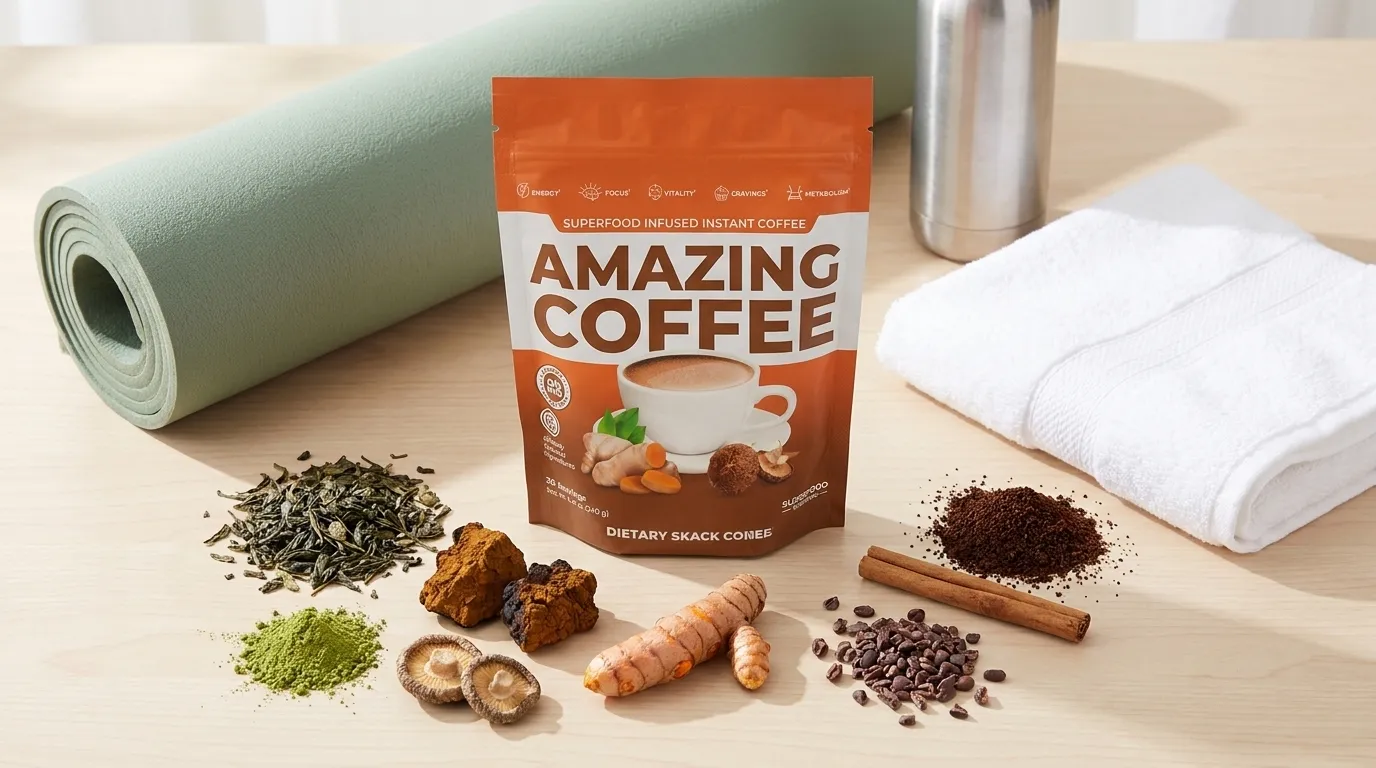
- Cordyceps — a mushroom studied for endurance and oxygen use. In the trial Cordyceps sinensis improves exercise performance in healthy older subjects: a double-blind, placebo-controlled trial, researchers looked at how cordyceps compounds may support ATP production and how efficiently the body uses oxygen during activity. That's a different kind of "energy" than a caffeine spike — more about the engine than the gas pedal.
- Chaga & Shiitake — mushrooms rich in beta-glucans studied for immune support. Consuming Lentinula edodes (Shiitake) Mushrooms Daily Improves Human Immunity: A Randomized Dietary Intervention in Healthy Young Adults is one of the more readable ones if you like to go down that rabbit hole.
- Turmeric — curcumin has been studied for cognitive support; Memory and Brain Amyloid and Tau Effects of a Bioavailable Form of Curcumin in Non-Demented Adults is the trial I point people to. Handy context for the "mental clarity" so many reviews mention.
- Maca root, ginseng, cocoa, cinnamon, ginger — the flavor-and-warmth crew that also happens to make it taste like something you'd want at 6 a.m.
None of this replaces sleep, and I'll be the first to say so. But the blend is the reason my morning feels like a smooth ramp instead of a launch and a crash.
A slightly fancier version for slow mornings
When I have five extra minutes, this is my favorite way to drink it — and it stretches the "sip slowly" rule into something you actually enjoy lingering over.

Cinnamon calm-energy latte
- 1 rounded tsp Amazing Coffee
- 4 oz hot water (just under boiling)
- 6 oz milk of choice, steamed or warmed and frothed
- 1/4 tsp cinnamon
- Optional: 1 tsp maple syrup or a date, blended
- Dissolve the coffee in the 4 oz hot water; stir in the cinnamon.
- Warm the milk in a small pot over medium, whisking until frothy (or use a handheld frother).
- Pour the milk over the coffee. Sweeten lightly if you want.
- Sit down with it. Don't drink it standing at the counter checking email — the whole point is the slow ramp.
Honest expectations
A few things I tell friends before they try it. Caffeine still adds up, so if you're sensitive, keep your last cup before early afternoon — plenty of reviewers actually mention better sleep once they stopped chasing 4 p.m. coffee, which tracks. The appetite thing is real for a lot of people ("It really does curb your appetite" comes up constantly), but it's not magic; give it time and pair it with actual meals. And results vary — "My only regret is that I did not do this sooner" is a lovely review, but your mileage is your own.
What I'll stand behind is the method above. Food first, water alongside, one serving, sipped slow. Do that and the shaky-hands version of your morning mostly disappears. It's the routine that turned me from a "useless without three cups" person into someone who genuinely likes just one.
These statements have not been evaluated by the Food and Drug Administration. The studies referenced above describe individual ingredients, not the finished product, and are not intended to diagnose, treat, cure, or prevent any disease. Amazing Coffee is a food product, not a medication. Caffeine affects everyone differently — if you're pregnant, nursing, taking medication, or managing a health condition, talk with your healthcare provider before changing your caffeine intake.
Renee develops recipes at Superfoods Company and has been a two-cups-before-noon coffee drinker for twenty years. Every recipe here gets tested in her own kitchen first.
Ready to try it for yourself?
Shop Superfoods Company