Why Ashwavana Zen Relax Leaves You Calm Without Flattening You Out

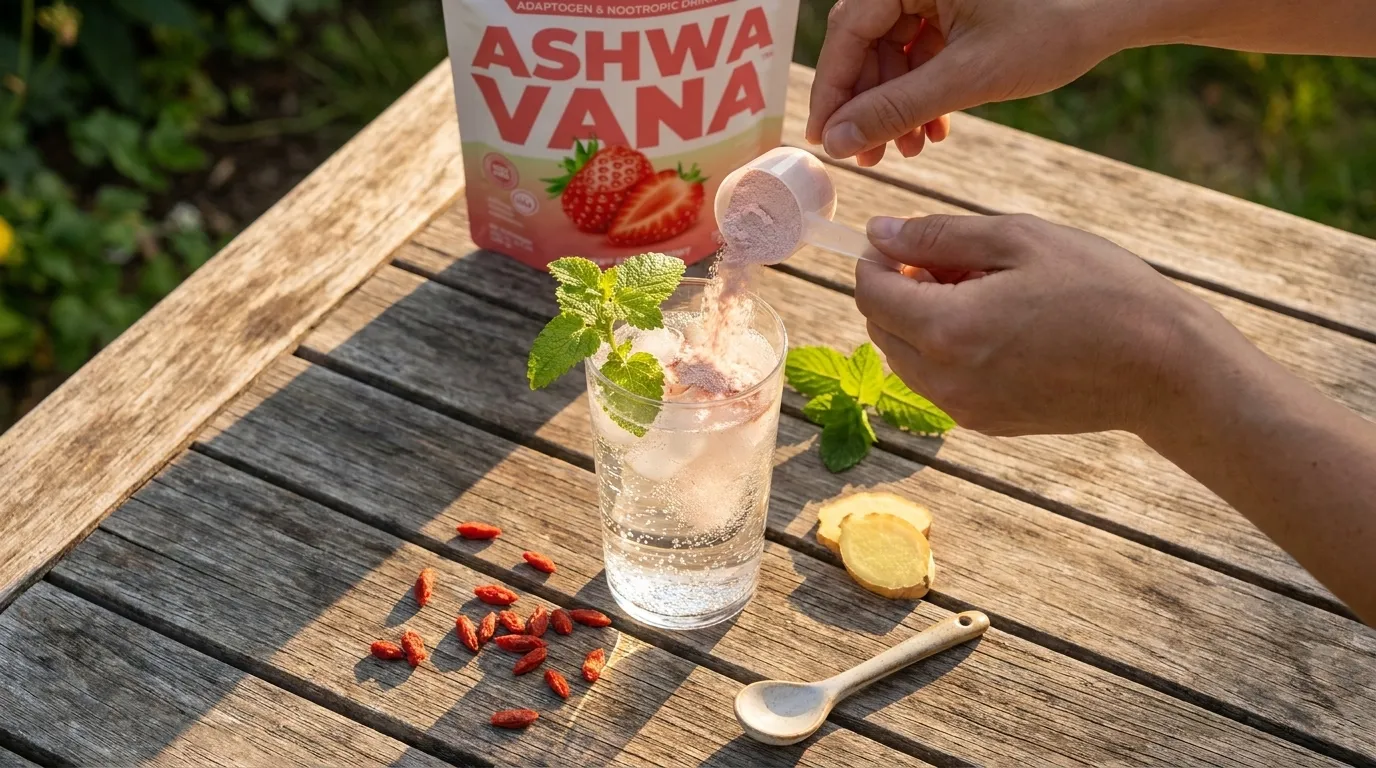
Last Tuesday fell apart around 2:40 in the afternoon. Three things went sideways at once, my inbox had that specific tilt to it, and I could feel my shoulders creeping up toward my ears. Instead of my fourth coffee — the one that would've had me vibrating by 4 — I made a glass of Ashwavana Zen Relax over ice. Twenty-five minutes later I wasn't sedated or floaty. I was just... not clenched anymore. Still sharp enough to finish the thing I was dreading. That gap — calm but not flattened — is the whole point, and it's also the part people ask me about most.
So let me do the thing I actually get paid to do: take the formula apart and explain, honestly, how it produces that feeling. I'll flag what the research strongly supports and where I'd pump the brakes.
The "zen" isn't one ingredient. It's a few of them pulling in the same direction.
When someone says Ashwavana Zen Relax made them feel calm, there's rarely a single hero doing all the work. The formula leans on a small cluster of ingredients that each nudge the stress response from a slightly different angle. Here's the one our reviewers come back to over and over:
"Super chill and zen. I feel relaxed and in a good mood no matter how stressful the day gets."
"No matter how stressful the day gets" is doing a lot of lifting there, and it's the right frame. The goal isn't to numb you. It's to turn the volume down on the stress signal so the day stops feeling like it's shouting.
Ashwagandha (Sensoril): the one that talks to your stress hormones
Sensoril is a standardized ashwagandha extract drawn from both the root and the leaf. Its job is to act on your stress axis — nudging GABA and serotonin signaling — and to lower circulating cortisol, the hormone your body pumps out when it decides the day is a threat. A clinical trial in people with generalized anxiety disorder specifically tested Sensoril, and a broader systematic review and meta-analysis found ashwagandha supplementation lowered cortisol, stress, and anxiety levels in adults. In plainer terms: it helps the nervous system stop idling in fifth gear. One reviewer put it about as bluntly as a person can:
"Anxiety is completely gone which I can't believe."
A caveat from me, because I'd want one: ashwagandha tends to work best with a little consistency. The person who takes it once and expects a thunderclap is usually underwhelmed. The person two weeks in is the one leaving that review.
L-Theanine: the reason it's calm and not drowsy
This is my favorite ingredient to explain, because it's the one that makes "relaxed but still focused" physiologically possible. L-theanine is an amino acid from tea leaves, and it increases alpha brain-wave activity — the electrical pattern your brain shows during wakeful, relaxed attention, the headspace you're in when you're absorbed in something but not stressed about it. A 28-day randomized, double-blind, placebo-controlled trial in adults with moderate stress (the AlphaWave L-theanine study) and a separate randomized controlled trial both point the same way: lower perceived stress and salivary cortisol, with attention holding steady. It's the opposite of a sedative. That's exactly why people describe this:
"Keeps me calm and energized no jittery feelings and no crashes."
Rhodiola (RhodioPrime 6X): for the specific fatigue that stress creates
Rhodiola rosea is a classic adaptogen — meaning it helps the body resist physical and mental fatigue — and RhodioPrime 6X is a concentrated standardized version. The research I lean on here looked at rhodiola for anxiety, stress, cognition, and mood, plus a randomized controlled trial in nursing students (a wonderfully stressed, sleep-deprived population) that tracked mental and physical fatigue. The takeaway: during demanding stretches, rhodiola supports attention and mental performance and takes some of the drag out of stress-related tiredness. This is the ingredient I credit when a reviewer says the calm came with drive attached:
"I also have amazing focus and drive throughout the day."
Magnesium: the mineral most of us are quietly short on
Magnesium is an essential mineral woven through nervous-system regulation and the stress response, and a genuinely large share of adults don't hit their daily needs. Restoring it is associated with reduced stress, better mood, and improved sleep — one randomized trial even found magnesium paired with vitamin B6 outperformed magnesium alone for severe stress in people who started out low. It also helps the body absorb other nutrients, so it's quietly doing backstage work for the rest of the formula. I think of magnesium as the floor: it won't necessarily make you feel something dramatic, but being deficient absolutely makes everything harder.

Lemon Balm & Vitamin D3: the mood supports
Lemon balm (Melissa officinalis) is an old-school calming herb, and its rosmarinic acid supports GABA activity in the brain. Clinical trials — including a systematic review and meta-analysis and a placebo-controlled trial in cardiac-surgery patients — show it can reduce anxiety and improve sleep quality. And vitamin D3 earns its spot for mood: low vitamin D tracks with low mood, and a dose-response meta-analysis found supplementation modestly reduces depressive symptoms, with the clearest benefit in people who are deficient or already feeling low. I'm deliberately using the word "modest" there — D3 is a steady supporter, not a mood switch.
Everything else isn't filler — it's the body you're calming down in
Stress isn't only a feeling in your head; it's inflammation, blood flow, and immune wear-and-tear too. The rest of the formula works on that terrain:
- Matcha — whole-leaf green tea rich in L-theanine and EGCG. Trials link it to lower stress and modestly better attention and memory, with its own theanine balancing the caffeine for steady, jitter-free focus.
- Turmeric — its active compound curcumin lowers inflammatory and oxidative-stress pathways, and meta-analyses connect curcumin to reduced anxiety and depressive symptoms.
- Ginger Root — gingerols scavenge free radicals; meta-analyses of RCTs show ginger raises antioxidant capacity and lowers inflammatory markers like CRP, IL-6, and TNF-alpha.
- Beet Root & Grape Seed Extract — beet root's dietary nitrate converts to nitric oxide to relax blood vessels and lower blood pressure, while grape seed proanthocyanidins (OPCs) support cerebral blood flow and, in older adults, improved processing speed and attention.
- Shiitake Mushroom — a beta-glucan mushroom; a randomized dietary trial found daily shiitake improved markers of immune function and lowered inflammatory markers.
- Chlorella, Goji Berry, Pomegranate, Cinnamon — the antioxidant-rich supporting cast that rounds out the superfood base.
Why it reads as a real alcohol alternative
A lot of people reach for a glass of wine at 6 p.m. for exactly one reason: they want the day to stop pressing on them. The problem is alcohol borrows calm from tomorrow — it fragments your sleep and leaves you flatter the next morning. What makes Ashwavana Zen Relax land as a swap isn't that it mimics a buzz; it's that it addresses the actual thing you were chasing. Lower cortisol, more alpha-wave calm, a mood lift, better sleep support — minus the hangover math. One reviewer summed up the full stack of it:
"I feel SO zen, I'm in a better mood, and it's helping me sleep better too."
And another named the texture of it, the shift from drowning to managing:
"More focus and calmness to get rid of being overwhelmed."
How I'd set expectations
Here's my honest dietitian framing. The theanine-and-matcha calm-focus tends to show up the same day, often within half an hour — that's the part you'll feel on day one. The ashwagandha, rhodiola, magnesium, and D3 benefits build with consistency; give those a couple of weeks of near-daily use before you judge them. And none of this replaces the basics — sleep, movement, actually eating lunch. It stacks on top of them. Think of it as tilting the odds in your favor on a loud day, not erasing the day.
If you already own a pouch, my best tip is boringly effective: use it before the stress peak, not after. A glass of Ashwavana Zen Relax at the first 2 p.m. shoulder-creep does more than one taken in the middle of a spiral.
These statements have not been evaluated by the Food and Drug Administration. This product is not intended to diagnose, treat, cure, or prevent any disease. The research described here refers to individual ingredients, not to the finished product, and individual results will vary. If you're pregnant, nursing, taking medication, or managing a health condition, talk with your healthcare provider before starting any new supplement.
Priya is a registered dietitian who reviews the science behind every ingredient we use. She spends her days turning clinical research into plain English.
Ready to try it for yourself?
Shop Superfoods Company