What "Calm, Focused Energy" Actually Feels Like (And the Science Making It Happen)

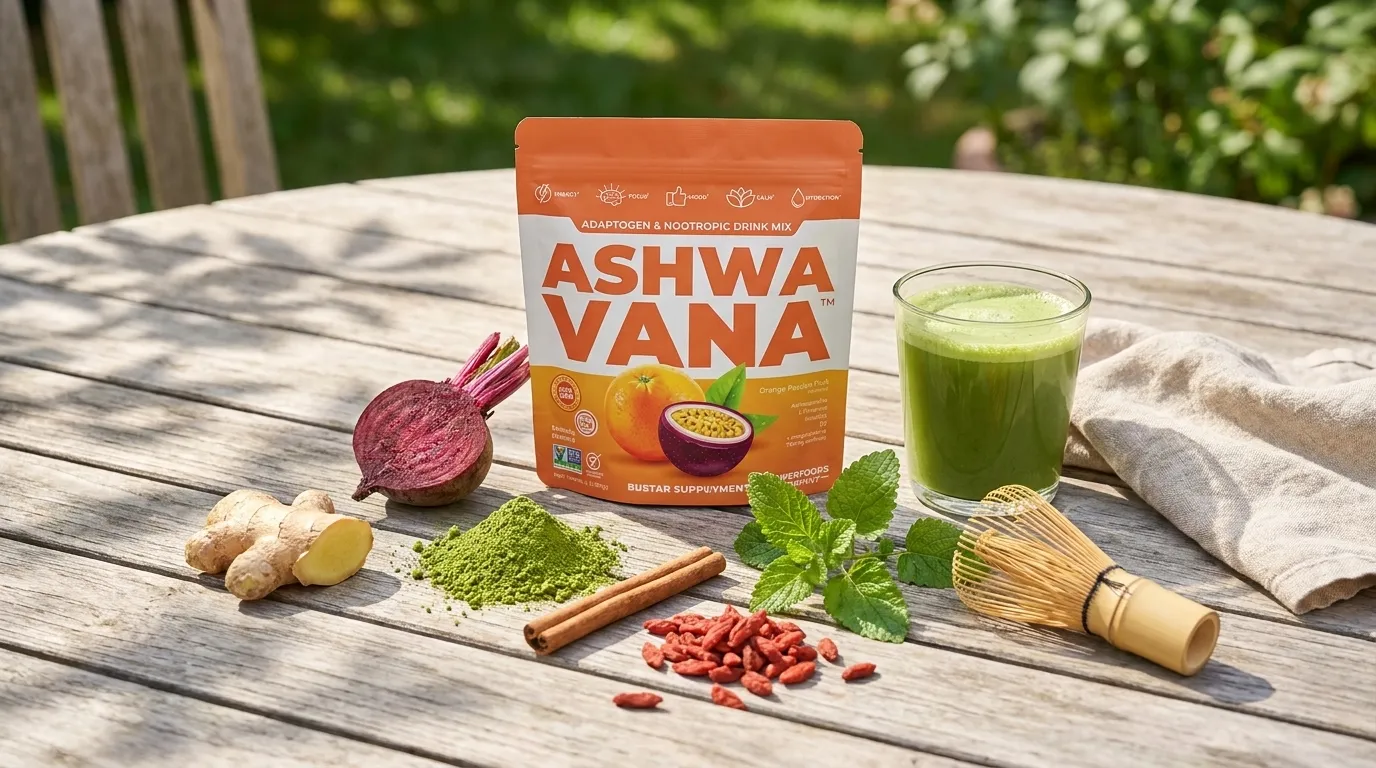
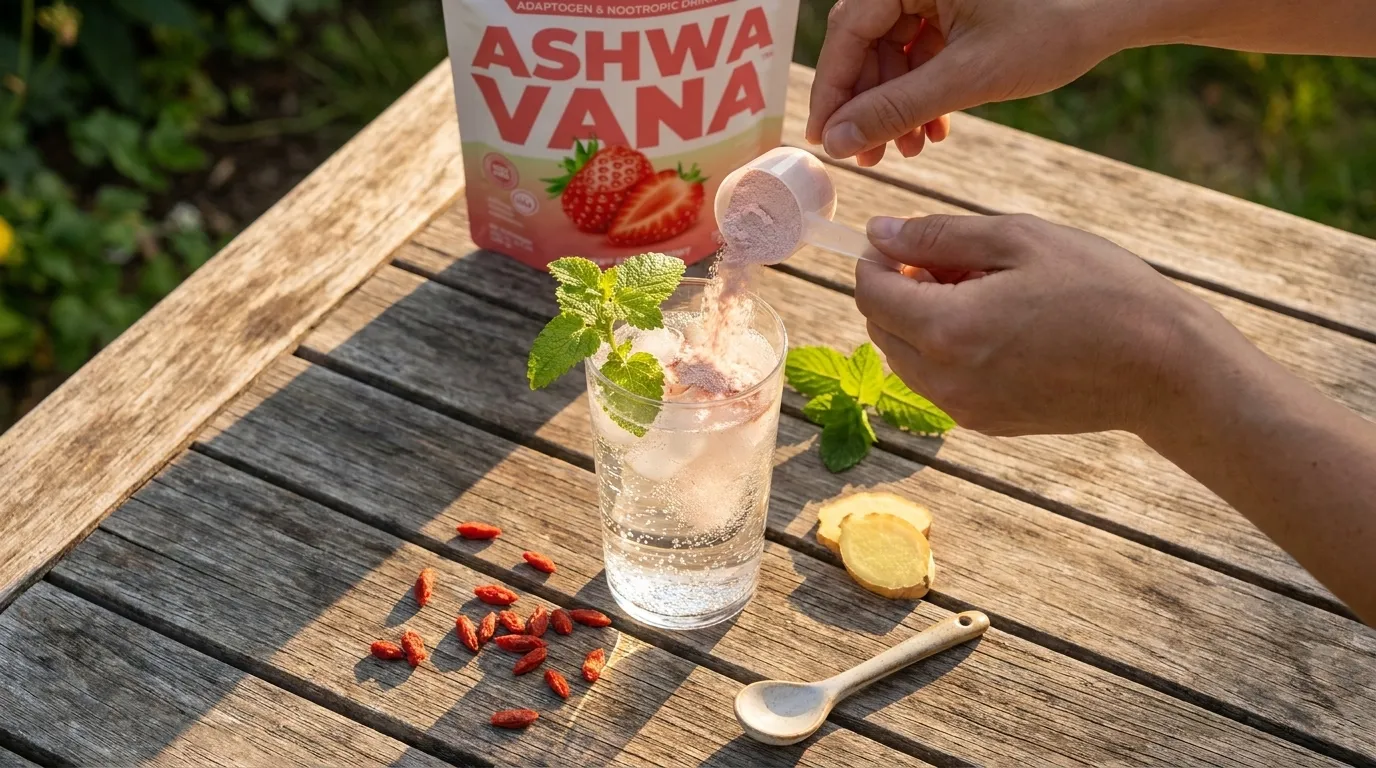
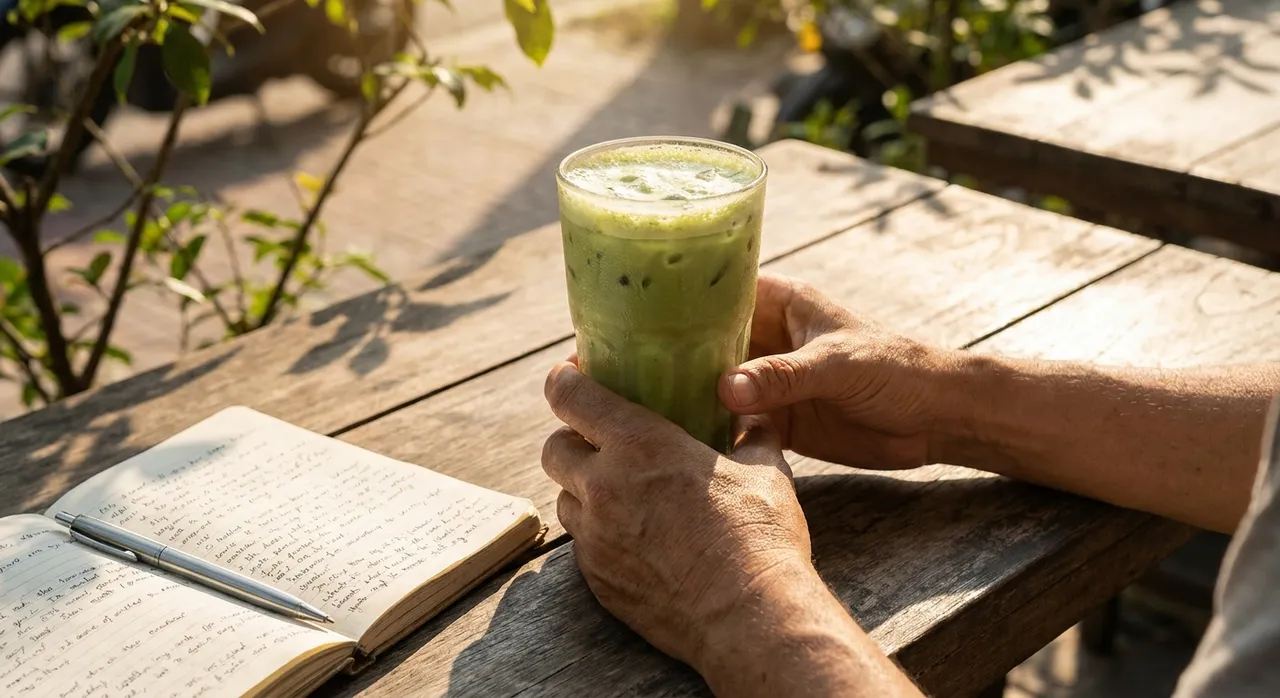
The first time I really noticed it, I was staring at a spreadsheet at 2:40 in the afternoon — the hour I've historically wanted to lie face-down on my desk. I'd had a green drink around 1:30 instead of my usual second coffee. And the crash just… didn't show up. No wall. No fuzzy, over-caffeinated buzz either. Just a quiet, workable kind of alert. As a dietitian, my first instinct wasn't "wow," it was "okay, why?" So I went and read the studies behind every ingredient in Ashwavana Guru Focus. Here's what's actually going on.
The problem with coffee isn't the caffeine — it's caffeine alone
Most of us aren't wired-but-tired because we're taking a stimulant. We're that way because we're taking a stimulant with nothing to balance it. Caffeine on its own tends to spike, then dip. It can tighten your shoulders and make your leg bounce under the desk.
The fix isn't less caffeine, necessarily. It's the right companion. In tea, that companion is L-theanine, and the research on the pairing is genuinely convincing. According to a summary of the clinical work, L-theanine paired with caffeine delivers smoother focus and calmer energy than coffee alone by balancing stimulating and inhibitory neurotransmitters in the brain. That same review notes that the combination has been shown to improve attention, sharpen reaction time, and meaningfully reduce jitters compared with caffeine on its own.
That's the whole thesis of this drink, and it's the thing customers keep describing in almost identical words. One wrote that it "leaves me feeling awake but BALANCED with a happy energy." Another put it simply: "I love the energy and focus without the jitters." That's not marketing language. That's the L-theanine-plus-caffeine effect in a sentence.
Where the caffeine comes from matters, too
The caffeine here isn't from a stripped-down powder. It's from matcha green tea, which naturally carries L-theanine, caffeine, and EGCG catechins together in the same leaf. That native pairing is exactly the combination the research points to for calm, focused attention without the spike-and-crash of caffeine alone. Trials on matcha specifically — in both drink and snack-bar formats — have looked at its effects on mood and cognitive performance, which is a nice bonus on top of the theanine story.
So instead of dosing caffeine and theanine separately and hoping the ratio works, you're getting them the way tea plants have packaged them for a few thousand years. I find that reassuring, honestly.
The adaptogens: turning the volume down on stress
Focus is only half the equation. If your nervous system is running hot, no amount of caffeine will feel "clean." This is where the adaptogens come in.
Ashwagandha — the cortisol dial
Ashwagandha (Withania somnifera) is the ingredient I get asked about most. It works on the hypothalamic-pituitary-adrenal axis — your body's central stress-response system — and helps blunt the cortisol response to chronic stress. Lower morning cortisol tends to track with calmer, steadier energy and less stress reactivity. That's been examined in a couple of solid randomized, double-blind, placebo-controlled trials, including one titled "An investigation into the stress-relieving and pharmacological actions of an ashwagandha extract," and a multi-centric study on KSM-66 ashwagandha in adults experiencing high stress and anxiety.
I want to be honest about scale here: a single serving in a blend is not the same as a high-dose isolated supplement in a study. But the mechanism is real, and it explains why so many reviews mention feeling calmer rather than just more caffeinated. One customer said, "It really has helped with my focus and mental clarity"; another that it "keeps my anxiety at bay." A postpartum reviewer's line stuck with me — she said her postpartum anxiety was gone. I'd never promise that. But calmer stress reactivity is the plausible thread.
Rhodiola and lemon balm — the supporting cast
Rhodiola rosea is another adaptogen, best known for easing stress-induced mental fatigue. There's a memorable study on Russian physicians working night duty — the kind of fatiguing, high-stakes condition where concentration falls apart — showing a standardized extract helped maintain mental performance. If your stress shows up as brain fog by mid-afternoon, that's the ingredient talking.
Lemon balm (Melissa officinalis) rounds it out. Its rosmarinic acid nudges GABA pathways — the brain's main "calm down" system — and it's been studied for attenuating lab-induced stress and supporting a balanced mood. Think of it as the gentle exhale in the formula.
"It makes me feel so focused, calm, and productive all day." — a phrase from our reviews that basically describes what the adaptogens and theanine are doing together.
Steady blood sugar = fewer crashes and cravings
Here's a part people skip: a lot of the 3 p.m. crash and the accompanying snack raid isn't caffeine at all. It's a blood-sugar swing. Three ingredients quietly work on that.
- Cinnamon — its polyphenols improve insulin sensitivity and slow gastric emptying, helping flatten the glucose swings that drive both energy dips and cravings. There's a meta-analysis specifically on cinnamon lowering fasting blood glucose.
- Ginger root — its gingerols support digestion and motility and can reduce post-meal blood-sugar spikes, which a randomized trial in nondiabetic adults looked at directly.
- Turmeric — curcumin lowers inflammatory markers like IL-6 and oxidative stress and touches neurotransmitter pathways; one randomized, placebo-controlled trial linked a turmeric extract to improved inflammatory markers and mental health.
Steadier glucose is the unglamorous reason a customer can say the energy comes "without any sort of crash," and why another mentioned it "curbs cravings." Not magic — just fewer peaks and valleys.
Blood flow: the ingredient category no one talks about
Your brain is roughly 2% of your body weight and burns about 20% of your energy. It runs on blood flow. Two ingredients here are all about that.
Beet root is loaded with dietary nitrate, which your body converts into nitric oxide — a signal that widens blood vessels, can lower blood pressure, and increases regional brain perfusion. A double-blind, placebo-controlled crossover study on dietary nitrate found it modulated cerebral blood flow and cognitive performance. Grape seed extract works alongside it: its proanthocyanidins are potent antioxidants shown to improve the function of the blood-vessel lining and promote vasodilation, studied in people with prehypertension and across a 16-trial meta-analysis on blood pressure.
And pomegranate ellagitannins add antioxidant, anti-inflammatory support; in some trials pomegranate juice actually increased task-related brain activity and memory performance in middle-aged and older adults. More fuel, more efficiently delivered.
The quiet foundational players
A few ingredients don't produce a "feeling" you'll notice by Tuesday, but they matter over time:
- Vitamin D3 acts on receptors throughout the brain and endocrine system. Correcting low vitamin D status is linked to better mood and less fatigue — deficiency runs the other way, toward low mood and tiredness. A systematic review and dose-response meta-analysis has looked at D3 and depression specifically.
- Vitamin K2 is D3's partner. As D3 raises calcium availability, K2 (via matrix Gla protein and osteocalcin) helps route that calcium into bone and away from arterial walls — a synergy covered in a narrative review on the two vitamins together.
- Goji berry, chlorella, and pomegranate add a broader antioxidant and micronutrient base — the housekeeping layer.
So what does "benefits" actually add up to?
If I zoom out, the formula is doing four jobs at once, and they reinforce each other:
- Clean stimulation — matcha's caffeine, smoothed by L-theanine.
- Lower stress load — ashwagandha, rhodiola, lemon balm.
- Stable fuel — cinnamon, ginger, turmeric keeping blood sugar level.
- Better delivery — beet root, grape seed, pomegranate supporting circulation.
That's why the reviews cluster around the same phrase — "calm, steady energy, better focus, and great hydration" — and why one person described being able to "tackle the day without anxiety." It's not one hero ingredient. It's the stack working in the same direction.
My honest take as the person who reads these studies: don't expect a lightning bolt. Expect the absence of the crash, first. Then, over a couple of weeks, a slightly quieter baseline. If you've already got it in your cabinet, give it a fair two-to-three-week run at a consistent time of day rather than judging it on day one. If you're still deciding — that's the realistic bar to hold it to.
These statements have not been evaluated by the Food and Drug Administration. This product is not intended to diagnose, treat, cure, or prevent any disease. The research described above investigates individual ingredients, not this finished product, and individual results vary. If you're pregnant, nursing, taking medication (especially for blood pressure, blood sugar, or thyroid conditions), or managing a health condition, talk with your healthcare provider before adding a new supplement.
Priya is a registered dietitian who reviews the science behind every ingredient we use. She spends her days turning clinical research into plain English.
Ready to try it for yourself?
Shop Superfoods Company