Why I Stopped White-Knuckling My 3 P.M. Crash

I used to schedule my afternoons around the crash. Around 2:45, my second coffee would wear off, my eyelids would get heavy, and I'd reach for a third cup I knew would keep me up too late. As a dietitian, I found this professionally embarrassing. I spend my days reading clinical trials about energy and stress — and I still couldn't get through a Tuesday without a stimulant rollercoaster.
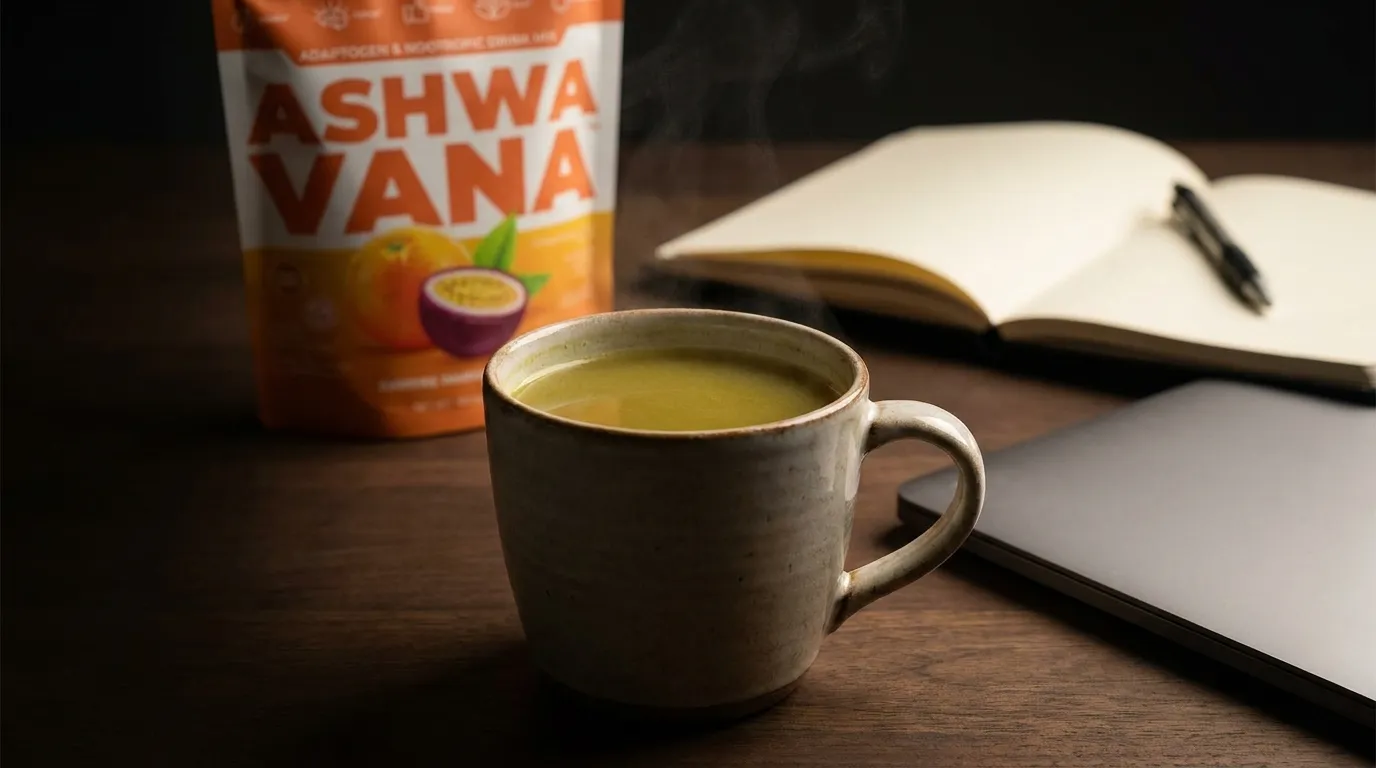
So when people ask me about the Ashwavana Guru Focus benefits, I don't lead with a marketing line. I lead with the thing that actually changed for me: the energy stopped having a cliff at the end of it. One reviewer put it better than I could — they said it "leaves me feeling awake but BALANCED with a happy energy." That word, balanced, is doing a lot of work, and it turns out the formula was built around it.
Let me walk you through what's in there and what the science actually says — including where the evidence is strong, and where it's more modest. You deserve both.
The two ingredients doing the heavy lifting on "calm, focused, no jitters"
If you've ever felt the difference between coffee jitters and clear-headed focus, you've felt the gap that L-theanine fills. L-theanine is an amino acid found in tea leaves, and it nudges your brain toward more alpha-wave activity — the kind associated with relaxed alertness rather than wired tension.
What's interesting is what happens when you pair it with caffeine instead of taking caffeine alone. In a double-blind, placebo-controlled crossover study on selective attention, researchers found that the L-theanine–caffeine combination improved measures of selective attention in sleep-deprived adults, in part by quieting mind-wandering and the brain's tendency to drift toward distractions. The combination, in other words, seems to smooth out caffeine's rough edge while keeping the alertness. That's the mechanism behind a phrase I see over and over in our reviews: "I love the energy and focus without the jitters."
The second workhorse is ashwagandha (Withania somnifera), an adaptogen that acts on the hypothalamic-pituitary-adrenal axis — your body's stress thermostat. In randomized, double-blind, placebo-controlled trials, including the study titled "An investigation into the stress-relieving and pharmacological actions of an ashwagandha extract" and a multi-centric trial on KSM-66 ashwagandha in adults with high stress, supplementation was associated with lower cortisol and reduced perceived stress. Lower morning cortisol tends to translate into steadier energy and less of that keyed-up reactivity. One customer's note has stuck with me: "my postpartum anxiety is gone." I'll never claim a supplement is a treatment — but I understand why she wrote it.

The supporting cast: why this isn't just two things in a tin
This is where the formula gets nerdy, and I mean that as a compliment. A few more ingredients round out the "calm, sharp, no-crash" profile:
- Rhodiola rosea — another adaptogen, studied in the classic SHR-5 trial on physicians working night shifts, where it was linked to reduced stress-induced mental fatigue. Useful when "tired but have to think clearly" describes your whole afternoon.
- Lemon balm (Melissa officinalis) — its rosmarinic acid interacts with GABA pathways, and reviews of clinical trials point to modest benefits for anxiety and a more balanced mood. It's the quiet one in the mix.
- Matcha green tea — nature's pre-built version of the theanine-plus-caffeine combo, with EGCG catechins added. Trials on matcha in drink and snack-bar formats have looked at its effects on mood and cognitive performance. It's why one reviewer described "calm, steady energy, better focus, and great hydration."
Energy that comes from blood flow, not just stimulation
Here's a distinction I wish more people understood: real, durable focus depends partly on getting oxygen and nutrients to your brain — circulation, not just stimulation. Three ingredients target exactly that.
Beet root is rich in dietary nitrate, which your body converts to nitric oxide. That widens blood vessels, and research on dietary nitrate has shown it can modulate cerebral blood flow and cognitive performance. Grape seed extract brings proanthocyanidins — potent antioxidants studied for improving endothelial (blood-vessel lining) function and supporting healthy blood pressure across a meta-analysis of sixteen trials. And pomegranate contributes ellagitannins like punicalagin; a study on pomegranate juice in older adults with mild memory complaints reported augmented memory and task-related brain activity on fMRI.
I'm not telling you a single serving will rewire your circulation. I am telling you the formula was assembled with a coherent logic — fuel the brain, then sharpen its attention — rather than just throwing in a stimulant and calling it focus.
The "no crash" part — and the cravings thing
A crash is often a blood-sugar story. You spike, you dip, you reach for a snack. Two ingredients here gently address that loop. Cinnamon polyphenols have been studied for improving insulin sensitivity and lowering fasting blood glucose in meta-analysis, and ginger root gingerols can blunt post-meal glucose spikes in a randomized controlled trial, on top of easing digestion. Steadier blood sugar means fewer energy valleys — and, for a lot of people, fewer cravings. That tracks with reviewers who say it "curbs cravings and appetite" and works as a cleaner replacement for coffee.
The quieter, long-game ingredients
Not everything in here is about today's focus. Vitamin D3 acts on receptors throughout the brain; a dose-response meta-analysis found that correcting low vitamin D status was linked to improvements in depression scores, and deficiency is associated with low mood and fatigue. It's paired with Vitamin K2, which activates the proteins that help route calcium into bone and away from arterial walls — the two vitamins work synergistically, which is a thoughtful pairing rather than a buzzword. Turmeric's curcumin has been studied for lowering inflammatory markers like IL-6 and supporting mental health in overweight participants. And chlorella and goji berry round out the antioxidant and micronutrient profile.
So, what does it actually feel like?
Honestly? Less dramatic than coffee and more useful. The reviews that ring truest to me are the unglamorous ones — "noticeably better focus and attention span," "It really has helped with my focus and mental clarity," and the one I think about on my hardest days: "helps me tackle the day without anxiety." Another simply said it "keeps my anxiety at bay." No fireworks. Just a workday that doesn't fall off a cliff at 3 p.m.
It makes me feel so focused, calm, and productive all day — and the energy comes "without any sort of crash."
My honest take as a dietitian: the magic isn't any single hero ingredient. It's the pairing logic — theanine softening caffeine, adaptogens dialing down cortisol, nitrates and polyphenols feeding the circulation that focus depends on. That's the kind of formula I can stand behind in plain English.
These statements have not been evaluated by the Food and Drug Administration. This product is not intended to diagnose, treat, cure, or prevent any disease. The studies referenced here describe the individual ingredients, not the finished product, and individual results vary. If you're pregnant, nursing, taking medication, or managing a health condition, talk with your healthcare provider before adding any new supplement.
Priya is a registered dietitian who reviews the science behind every ingredient we use. She spends her days turning clinical research into plain English.
Ready to try it for yourself?
Shop Superfoods Company